
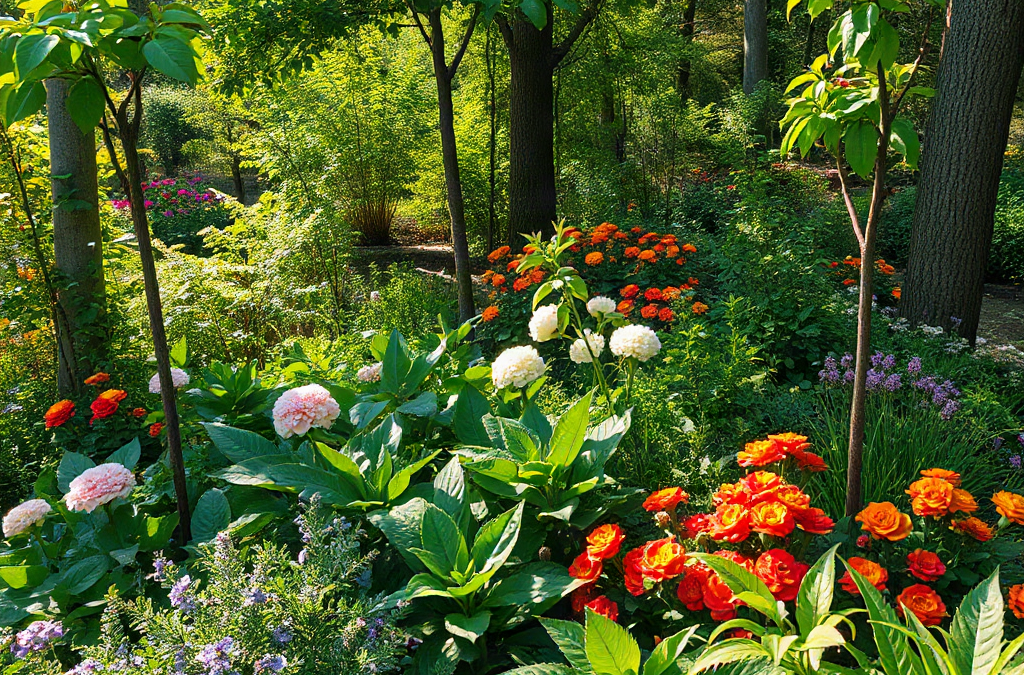
Forest garden layers compete for sunlight when tree canopies, shrubs, vines, and tall herbs overlap so heavily that lower plants receive too little direct or filtered light. Manage that competition by thinning crowded branches, limiting vigorous climbers, spacing shrubs according to mature width, and placing shade-tolerant groundcovers beneath the darkest canopy. Prune selectively rather than stripping the upper layer, because dappled shade protects soil and can benefit currants, woodland herbs, and young trees. Watch for leaning stems, sparse flowering, bare lower branches, and declining fruit production.
Which Forest Garden Layers Create the Most Shade?
The canopy and low-tree layers control most of the light reaching a forest garden, but their effect depends on leaf density, branch height, seasonal timing, and the path of the sun. A mature apple with an open branching structure may cast usable dappled shade, while a smaller evergreen can create a darker footprint throughout the year. Mature size alone therefore does not reveal which plant is responsible for poor light below.
The shrub layer becomes a serious competitor when several bushes merge into one continuous wall of foliage. Hazelnuts, elderberries, and other vigorous multistem shrubs can broaden rapidly after establishment. If their outer branches overlap, they intercept low-angle morning and afternoon sun before it reaches herbs and groundcovers. Dense shrubs can also shade their own lower wood, producing bare interiors and moving flowers or fruit toward the exposed outer edge.
Vines complicate the structure because they occupy other plants rather than a fixed horizontal layer. A grapevine trained along a dedicated arbor has a predictable shadow. The same vine allowed to climb through a fruit tree can spread foliage across productive branches, weigh down limbs, and obscure where the shade originates. Vigorous climbers should not be treated as harmless space savers simply because their roots occupy little ground.
Tall herbs can create short-term competition even though they are lower in the system. Jerusalem artichokes, large perennial flowers, and densely planted support species may shade young shrubs during the part of the season when those shrubs need active growth. By contrast, low herbs and groundcovers rarely deprive established trees of meaningful sunlight, although they may compete with seedlings at close range.
A practical diagnosis starts by identifying which foliage sits between the sun and the struggling plant. Consider three different forms of shade:
- Permanent shade comes from buildings, fences, evergreens, and dense woody structure.
- Seasonal shade develops after deciduous plants leaf out and may still allow spring crops to perform.
- Moving shade crosses a bed for part of the day and may leave enough usable light for adaptable plants.
A common mistake is blaming the tallest tree automatically. A hedge on the sun-facing boundary or an unmanaged vine may block more useful light than a high, open canopy. Trace the actual shadow before deciding which layer must be cut back.
How Can You Read Sunlight Patterns Before Pruning?
Sunlight should be assessed where the leaves grow, not merely at ground level or from a single midday observation. Check the planting area in the morning, around solar midday, and again during the afternoon. Repeat the check after trees and shrubs have fully leafed out. A spring assessment made beneath bare branches can greatly overestimate the summer light available to fruiting shrubs and perennial herbs.
Direct sun is only part of the picture. Bright, shifting light beneath an open canopy can support plants that tolerate partial shade, while a uniformly dim site may suppress flowering and produce thin, stretched growth. Compare plants of the same type in different positions. If a currant near the canopy edge has dense foliage and fruiting wood but one deeper inside has long internodes and little fruit, light is a plausible limiting factor. If both plants decline equally, water, soil conditions, root damage, or disease may deserve closer attention.
Plant shape provides useful evidence. Stems that lean consistently toward an opening are responding to directional light. Sparse lower branches indicate that upper foliage or neighboring plants are intercepting light before it reaches the plant interior. Reduced flowering is especially relevant for sun-demanding fruits, but it should not be interpreted alone: pruning at the wrong time, poor pollination, drought, or excess nitrogen can produce similar symptoms.
A simple seasonal light audit keeps the decision grounded in observation:
- Mark the areas receiving direct sun, dappled light, and continuous shade at three times of day.
- Note which branches, shrubs, vines, or structures create each shadow.
- Record visible plant responses, including leaning growth, bare stems, weak flowering, and leaf scorch.
- Recheck the same points in late spring and midsummer before making major structural cuts.
Photography is useful when taken from the same location and direction. Images made several weeks apart reveal how quickly a canopy closes and whether one aggressive plant is taking over an opening. They also prevent a gardener from relying on a vague memory of last season.
Do not assume that every shaded plant needs more sun. Tender woodland herbs may wilt or scorch if a canopy is opened abruptly, and shallow soil can dry faster after branch removal. The goal is to identify mismatches: a sun-demanding crop in a persistently dark pocket, a shade-adapted plant suddenly exposed, or two woody layers occupying the same light envelope. That distinction determines whether pruning, moving a plant, or changing the planting plan is the sounder response.
What Should You Prune, and What Should You Keep?
Prune growth that creates redundant shade before removing branches that define the permanent structure. Begin with dead, damaged, crossing, inward-growing, or tightly crowded branches. Then address vigorous upright shoots, low limbs that smother a shrub layer, and vines spreading beyond their support. This sequence improves light penetration without turning a sheltered planting into an exposed clearing.
Thinning cuts are generally more useful than shortening every branch tip. Removing a selected branch back to its point of origin creates an opening through the canopy. Repeatedly clipping the outside of a tree or shrub can stimulate dense regrowth near the cut ends, producing an even thicker shell of leaves. That reaction is particularly counterproductive when the purpose of pruning is to admit light into the interior.
Work from the plant causing the shade rather than cutting the shaded plant in an attempt to make it cope. For example, if a grapevine blankets the southern side of an apple tree, return the vine to its intended framework instead of reducing the currant beneath it. If several hazelnut stems have expanded into an herb bed, removing selected older stems at the base may preserve the shrub while reopening lateral light. The appropriate timing and amount depend on the species, its age, and whether it flowers or fruits on old or new wood.
Retain canopy elements that perform more than one useful function. High branches may cast light shade while protecting soil from extreme heat. A deciduous crown can provide summer shelter yet permit early spring growth before leaf-out. Productive fruiting wood, stable scaffold branches, and healthy habitat features should not be removed casually just to make the planting look uniformly bright.
Major canopy change is better staged than completed in one severe session. Abrupt exposure may cause bark injury on previously shaded limbs, dry the soil, trigger strong regrowth, or stress understory plants adapted to cooler conditions. Make a limited set of purposeful cuts, observe the resulting light during the growing season, and reassess after new growth has settled. Large branches, trees near structures, and work requiring climbing are appropriate situations for a qualified tree professional.
Signs that selective pruning is working include brighter moving patches beneath the canopy, sturdier growth in the desired direction, improved flowering over subsequent seasons, and less vine spread across tree branches. Rapid water loss, scorched foliage, rampant shoots, or a large gap that remains exposed all day indicate that too much shelter may have been removed. Pruning is successful when it changes the light distribution while retaining a layered, resilient structure—not when it erases the layers.
Redesigning Crowded Layers Without Starting Over
Crowded forest gardens can often be corrected by assigning each plant a clearer light position rather than removing most of the planting. The most sun-demanding fruiting plants belong along the sun-facing edge, in canopy openings, or where shadows move away during the day. Shade-tolerant herbs and groundcovers fit beneath denser crowns. Plants that tolerate shade but fruit poorly there can occupy transitional zones where they receive several periods of direct or bright filtered light.
Spacing should reflect mature spread rather than nursery size. Two young shrubs separated by an apparently generous gap may form a continuous thicket within a few seasons. When that happens beneath expanding trees, the shrub and low-tree layers begin using the same vertical space. Move a young, transplantable specimen early if its eventual position is clearly unsuitable; repeated pruning is a poor long-term substitute for adequate room.
Edge design is often more productive than uniform layering across the whole site. A stepped arrangement places lower plants toward the sun and progressively taller plants behind them. On a small property, this may mean herbs and groundcovers at the bright boundary, berry shrubs farther inward, and trees on the side least likely to cast long shadows across the entire garden. Site orientation, neighboring trees, slopes, and buildings can alter that pattern, so observed sun paths should override a standard diagram.
Root competition must be considered alongside light. A plant may remain weak after the canopy is thinned because established trees and shrubs capture much of the available moisture. Opening the canopy can increase evaporation and raise the understory’s water demand at the same time. Mulch, careful watering during establishment, and reducing overcrowding may be more effective than another round of pruning.
When a plant repeatedly fails to flower or maintain sturdy growth after measured adjustments, reassignment is usually better than forcing it to remain. Move it during an appropriate dormant period if the species transplants reliably, replace it with a plant suited to the existing light, or create a new opening elsewhere. A dark pocket beneath mature woody plants can still be useful for leaf crops, woodland herbs, habitat cover, or mulch production even if it cannot support a sun-loving fruit crop.
The weakest redesign approach is trying to preserve every plant in its original place. Forest gardens change as woody plants mature, and some early support plants are meant to be reduced or removed. Review the structure annually, but avoid constant intervention. A stable arrangement should need periodic thinning and vine control, not repeated drastic cutting to keep inherently incompatible layers together.
Frequently Asked Questions
Which forest garden layer needs the most sunlight?
Fruit-producing canopy trees, small fruit trees, and many flowering shrubs usually need the brightest positions. Their exact requirements vary by species, while woodland herbs and some groundcovers can use filtered light beneath them.
Can a forest garden have too many layers?
Yes. Layers become counterproductive when several plants occupy the same light space, vines cover productive branches, or lower plants remain weak and sparse. Functional separation matters more than including every possible layer.
Should I remove a tree that shades berry bushes?
Not immediately. Identify the branches causing the shade, assess the tree's value, and try selective thinning or relocating younger shrubs first. Tree removal may be justified when the long-term design remains incompatible.
How can I tell whether shade is reducing fruit production?
Compare flowering, fruiting wood, and stem strength with the same species in a brighter position. Sparse bloom and growth leaning toward an opening support a light diagnosis, but water, pruning history, and pollination should also be checked.
Will pruning the canopy harm shade-loving plants?
It can if the change is abrupt. Increased sun may scorch foliage and dry the soil, so open the canopy gradually and monitor moisture and leaf condition through the following growing season.
Conclusion
Effective light management begins with observing which plant creates each shadow and how that shadow changes after leaf-out. Prioritize tangled vines, redundant stems, crossing branches, and obvious overlap before altering valuable canopy structure. Use thinning cuts to create controlled openings, then allow enough time to judge the response rather than pruning repeatedly in the same season.
Where crowding is structural, reposition young plants or replace poor matches with species suited to the available light. Keep mature spread, sun direction, soil moisture, and fruiting requirements in the same decision. The next practical step is a three-times-per-day light check followed by a marked plan showing which layer should remain, which growth needs restraint, and which plant would perform better elsewhere.


