
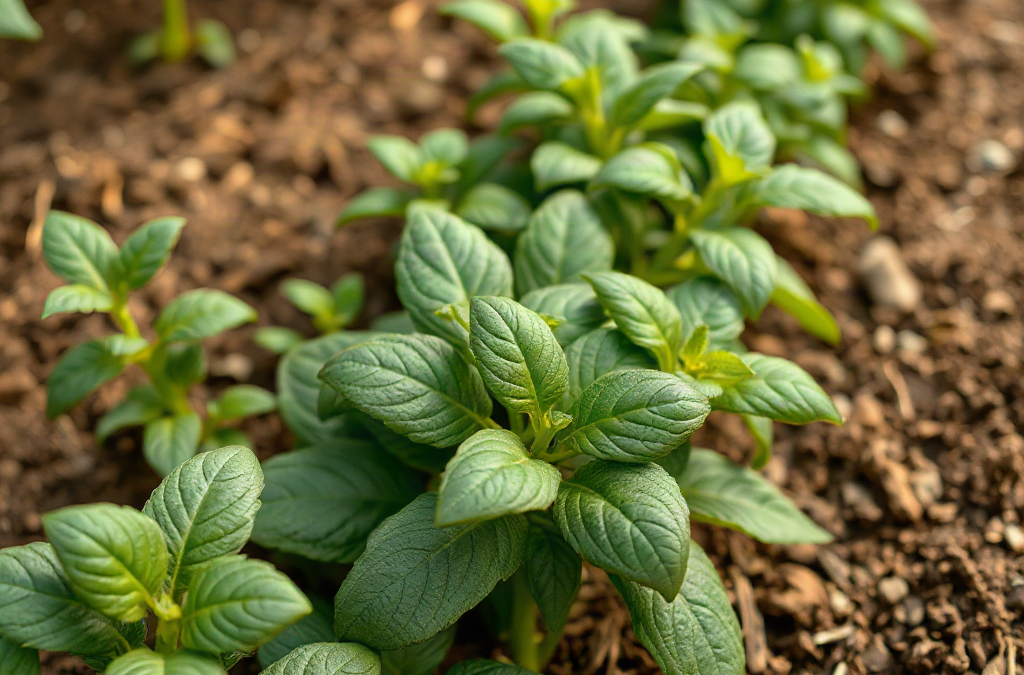
Companion planting layouts increase competition when neighboring crops share the same root zone, mature into overlapping canopies, or demand water and nutrients at the same time. Common mistakes include measuring from seedling size, placing vigorous herbs beside slower vegetables, crowding several heavy feeders together, and allowing tall crops to shade sun-dependent partners. Arrange plants by mature width, root behavior, height, and harvest timing rather than relying only on companion charts. Keep each crop’s normal spacing unless reliable crop-specific guidance supports an adjustment, and watch for leaning stems, pale leaves, slow growth, rapid wilting, or uneven yields as evidence that the pairing is too competitive.
What you’ll learn
This guide covers the following practical points:
- Why Do Recommended Companion Pairings Still Compete? — A compatible crop pairing is not automatically a workable physical arrangement.
- Are You Spacing Seedlings Instead of Mature Plants? — Seedling-scale layouts become crowded because young transplants conceal their eventual width.
- How Do Roots, Water, and Nutrients Create Hidden Competition? — Below-ground competition can begin before crowding is obvious above the soil.
- When Do Height, Shade, and Timing Disrupt the Layout? — Plant height becomes competitive when shade falls on a crop that requires stronger light for much of the day.
Why Do Recommended Companion Pairings Still Compete?
A compatible crop pairing is not automatically a workable physical arrangement. Companion recommendations often describe a possible relationship, such as attracting pollinators, providing temporary shade, or making efficient use of different growth periods. They do not cancel each plant’s need for adequate light, soil moisture, nutrients, airflow, and rooting space. Two species may be acceptable neighbors while still performing poorly when packed into the same square of soil.
The weak assumption is that a claimed companion benefit outweighs ordinary crop competition. Consider tomatoes and basil. Basil can occupy an edge or opening near tomatoes, but several basil plants placed tightly around every tomato stem create a dense surface canopy and additional demand for water. As the tomato roots expand and the basil branches outward, both crops draw from an increasingly congested zone. The pairing is not necessarily the problem; the number of plants and their positions are.
Layout also determines whether a theoretical benefit reaches the crop that needs it. Flowers intended to attract beneficial insects can work from the bed margin, where they receive sun and remain visible. Threading them through every vegetable row may interrupt normal spacing without offering a proportional advantage. Likewise, an aromatic herb does not need to touch another crop to share the same bed. Physical contact is rarely a sensible measure of companionship.
Start with the recommended spacing for each main crop, measured from stem center to stem center. Treat companion species as additional occupants rather than free filler. Place them only where their mature canopy and likely root zone can fit without narrowing paths, blocking irrigation, or surrounding a crop that needs airflow. Bed edges, row ends, containers, and nearby strips often preserve the intended diversity with less direct competition.
A useful comparison is a bed designed around one priority crop versus a bed designed as a collection of pairings. The priority-crop approach reserves light, root room, and access for the vegetable expected to provide the main harvest; supporting plants fill genuine openings. The pairing-first approach often accumulates too many neighbors because every suggested relationship appears beneficial in isolation. For a productive layout, crop capacity should set the limit, not the number of favorable combinations found on a chart.
Are You Spacing Seedlings Instead of Mature Plants?
Seedling-scale layouts become crowded because young transplants conceal their eventual width. A tomato, zucchini, kale plant, or branching herb may look isolated in spring but occupy much of the bed after several weeks of active growth. Filling the visible gaps with permanent companions commits the same space twice: once to the expanding main crop and again to plants already rooted between it and its neighbors.
Mature spread matters more than the diameter of the nursery pot. Zucchini leaves can arch over low herbs, while indeterminate tomatoes can widen beyond their supports if side growth is not managed. Bush beans sown around these crops may initially receive full sun, then become shaded and difficult to reach. Reduced access has secondary costs: hidden produce is missed, wet foliage stays enclosed, and harvesting one crop damages another.
Different spacing instructions can create confusion in mixed beds. A crop’s stated spacing usually assumes neighboring plants of the same type, yet substituting another species does not make the space requirement disappear. If lettuce is inserted between young cabbages, it works best as a timed catch crop harvested before cabbage leaves close the gap. Leaving the lettuce to form full heads while the cabbage reaches mature width changes a succession plan into direct canopy competition.
Use a mature-canopy sketch before planting. Mark the center of each long-season crop, then draw or imagine its expected above-ground footprint based on the cultivar and training method. Reserve access to trellises and harvest points. Only after those areas are protected should short-lived or compact companions be added. A practical order is:
- Place structural crops first: locate trellised tomatoes, cucumbers, pole beans, or other tall plants.
- Reserve mature footprints: account for branches and leaves, not just stems.
- Add early harvests: use radishes, baby greens, or small lettuce only where they can leave before closure.
- Move permanent fillers outward: keep spreading herbs and flowers near borders or row ends.
Success is visible when neighboring canopies meet gently without smothering one another, leaves dry after watering, and each crop remains reachable. Failure appears as plants leaning toward light, lower leaves yellowing under dense growth, or repeated pruning merely to preserve a path. Pruning can manage a planned canopy, but it should not be the only thing preventing an overloaded bed from collapsing into one mass.
How Do Roots, Water, and Nutrients Create Hidden Competition?
Below-ground competition can begin before crowding is obvious above the soil. Roots do not remain inside neat circles drawn around each stem. They spread through moist, aerated soil, often concentrating where irrigation and compost are most available. When several actively growing crops share that limited volume, the fastest or most established root systems may capture water before slower neighbors can use it.
Grouping crops only by visible size misses this pressure. A row of young brassicas beside established perennial herbs may appear roomy, but the herbs already occupy part of the root zone. Mint is an extreme example because its spreading stems and roots can move through a bed; containing it in a separate pot is usually more manageable than relying on open-ground boundaries. Vigorous oregano or sage may also claim more space over time than their original planting holes suggest.
Water demand produces another mismatch. Shallow-rooted salad crops can wilt quickly as the surface dries, while large fruiting vegetables draw substantial moisture from a broader area. Frequent light watering may keep the top layer damp yet encourage roots to remain near the surface, increasing overlap. Deeper, appropriately timed watering generally wets a larger soil profile, but it cannot compensate for placing more plants in the bed than the soil volume and irrigation system can support.
Nutrient competition is most likely when several long-season, high-demand crops are concentrated together and expected to mature simultaneously. Adding more fertilizer is not a complete correction. Excessive feeding can drive lush foliage, and nutrients do not resolve shortages of light, oxygen, or water. Compost improves soil properties and contributes nutrients, but it does not create unlimited carrying capacity.
Check the irrigation pattern rather than assuming all companions receive equal water. After watering, inspect moisture in several locations and depths without damaging major roots. Bed edges, zones beneath dense foliage, and areas near drip emitters can behave differently. If one plant wilts repeatedly while its neighbors remain firm, determine whether the emitter placement, root congestion, or canopy interception is producing the imbalance.
A better layout separates plants with similar peak demands or staggers those demands over time. Peas harvested before summer crops reach full size create less sustained competition than two large fruiting crops peaking together. Containerizing aggressive perennial herbs also protects annual vegetable space. Watch for pale new growth, unusually small leaves, premature bolting, and reduced fruit set, but avoid assigning every symptom to competition; heat, pests, disease, soil pH, and irregular watering can produce similar signs.
When Do Height, Shade, and Timing Disrupt the Layout?
Plant height becomes competitive when shade falls on a crop that requires stronger light for much of the day. Tall companions should be positioned according to the path of the sun, not simply placed in the bed’s center for symmetry. The exact direction and duration of shade vary with season, latitude, nearby structures, and trellis orientation, so observing the site is more reliable than following a universal diagram.
Some shade is useful. Lettuce may remain usable longer with protection from intense afternoon sun, and a young transplant may benefit from temporary shelter during establishment. The mistake is treating all shade as beneficial or permanent. A corn row, pole-bean trellis, or mature tomato canopy can turn brief relief into hours of reduced light. Fruiting crops placed behind that barrier may stretch, flower poorly, or ripen unevenly.
Timing can prevent the same arrangement from becoming competitive. Radishes between young broccoli plants can be harvested while the broccoli is still small. The identical positions fail if the radishes are left too long or replaced immediately with another full-season crop. Succession planting succeeds only when the first occupant leaves before the second needs the reserved resources. Calendar estimates help, but actual growth and harvest readiness should control the handoff.
Growth rate matters as much as final size. Fast vines can climb supports intended for slower crops, then cover their leaves and complicate harvest. Nasturtiums used near vegetables, for example, may spread farther than expected in favorable conditions. They can be redirected or trimmed, but planting them at an outer corner gives their growth somewhere to go. A confined center position leaves no easy correction except removal.
Observe shadows at several points during the day once tall crops approach useful height. Check whether a companion receives direct light during its most active growing period and whether air can move through the lower canopy. Orienting taller plants toward the side where their shadows fall away from sun-demanding crops may help, but buildings, fences, and slopes can reverse the expected result.
The practical choice is between planned shade and accidental shade. Planned shade targets a heat-sensitive, short-season crop and includes an exit date. Accidental shade develops because mature height, trellis direction, or vine spread was omitted from the layout. If stems lean strongly, foliage thins on the shaded side, or fruiting plants produce abundant leaves with weak flowering, reassess light exposure before adding fertilizer.
How Can You Audit and Correct a Competitive Layout?
A useful layout audit separates crowding symptoms from ordinary seasonal change. Inspect the bed at canopy level, soil level, and from the access path. Look for leaves stacked in persistent shade, plants that cannot be reached without bending neighbors, dry pockets after irrigation, and roots or runners moving into another crop’s allotted area. Compare plants of the same crop in different positions when possible; uneven performance can reveal a local layout problem.
Prioritize irreversible conflicts first. A vigorous vine overtaking a small transplant needs attention before minor leaf contact between two compact crops. Redirect flexible stems onto their own support, harvest mature catch crops, thin excess seedlings, and remove volunteers that were never included in the space calculation. If an aggressive perennial is invading annual vegetables, moving it to a container may be more effective than repeatedly cutting its top growth.
Use this compact check before adding or relocating a companion:
- Canopy: Will both plants fit at mature width without constant cutting?
- Light: Where will the taller plant’s shadow fall at midday and later afternoon?
- Roots: Is either species spreading, established, or concentrated around the same emitters?
- Timing: Will a temporary crop be harvested before the main crop closes the space?
- Access: Can both crops be watered, inspected, supported, and harvested independently?
Correction does not always mean removing a plant. An additional drip line can address uneven delivery when total density remains reasonable. A separate trellis can prevent vines from covering neighboring foliage. Early harvesting can release space, and selective pruning can improve access when the crop tolerates that treatment. These measures are appropriate for a modest conflict; they cannot make an overfilled bed function as though it contained fewer mature plants.
Signs of improvement include slower midday wilting, more even growth, dry foliage between waterings, accessible fruit, and clear space around support structures. A layout is still failing when irrigation must run excessively to satisfy one congested area, neighboring plants repeatedly lean away from shade, or pruning removes productive growth every week merely to maintain separation.
Record the mature width, removal date, and observed shade of each major crop before redesigning the next season. Photographs taken from the same position at planting, early growth, and full canopy are especially useful. They expose where optimistic spring spacing became summer congestion. The next layout can then reduce plant count, shift permanent companions to margins, or pair long-season crops with genuinely temporary neighbors rather than repeating the same crowded pattern.
Frequently Asked Questions
Can companion plants be placed closer than their normal spacing?
Do not reduce spacing automatically. Keep the main crops at their normal center-to-center distance, and add companions only when mature canopies, roots, light, and access still fit.
What is the clearest sign that companion plants are competing?
Uneven growth tied to position is a strong clue, especially when plants lean for light, wilt sooner near vigorous neighbors, or develop sparse growth beneath an overlapping canopy.
Should flowers be planted throughout a vegetable bed?
Not necessarily. Flowers at bed edges or row ends can provide bloom and insect access without taking root space from every vegetable or obstructing harvesting routes.
Can extra fertilizer fix an overcrowded companion layout?
No. Fertilizer cannot correct inadequate sunlight, root volume, airflow, irrigation coverage, or physical access, and unnecessary feeding may produce excessive leafy growth.
Which companion plants are best suited to temporary gaps?
Quick crops such as radishes, baby greens, or small lettuces can work when they are harvested before long-season vegetables expand into the reserved space.
Conclusion
Design mixed beds around mature plants rather than attractive combinations on a companion chart. Reserve adequate spacing, sunlight, irrigation coverage, and access for the crop that matters most, then place supporting species in genuine openings, at row ends, or along borders. Short-season vegetables can use temporary gaps, but their harvest date must precede canopy closure.
Audit existing beds for overlapping foliage, persistent shade, dry pockets, invading roots, and plants that cannot be reached without damage. Correct the largest conflict first by thinning, harvesting, redirecting vines, adjusting water delivery, or moving aggressive herbs to containers. Keep photographs and notes through the season so next year’s plan reflects actual mature width and shadow patterns. Productive companion planting comes from controlled proximity, not maximum density.


