
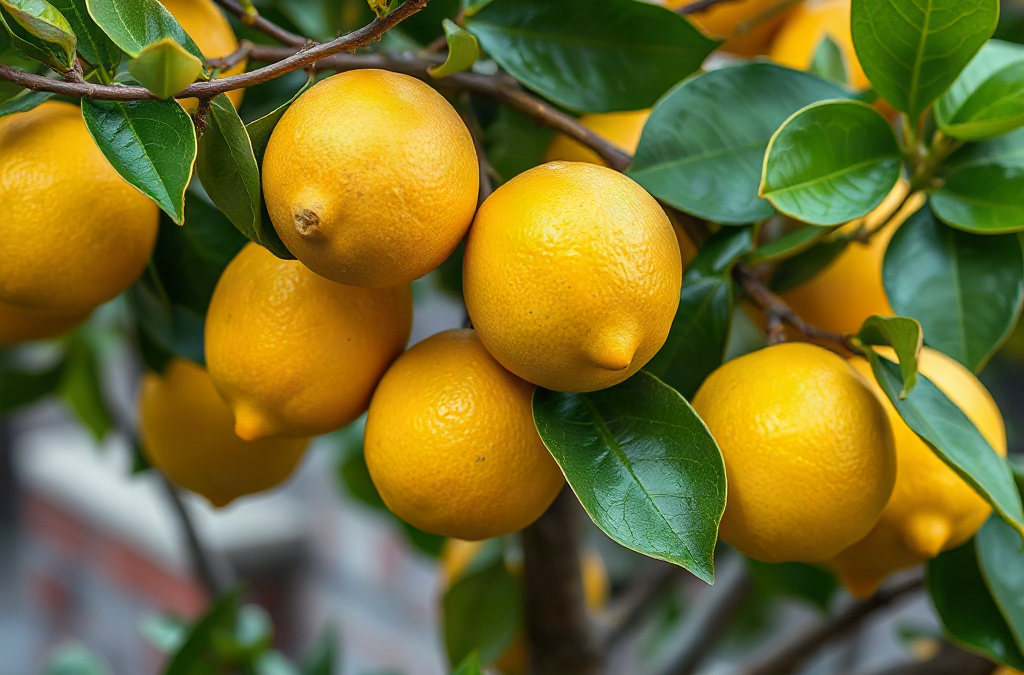
Lemon trees generally grow outdoors year-round in USDA zones 9–11, while cold protection becomes increasingly important near 32°F and urgent when forecasts approach the upper 20s. A tree’s actual risk reflects its cultivar, age, dormancy, exposure, and the duration of freezing conditions—not the zone number alone. Protect roots with mulch, irrigate dry soil before the freeze, cover the entire canopy to the ground, and add a safe heat source beneath the cover during harder freezes. Container lemons should be moved into bright shelter before frost, and damaged branches should not be pruned until spring growth reveals which wood survived.
What you’ll learn
This guide covers the following practical points:
- Which Zones Support Lemon Trees Outdoors? — USDA Plant Hardiness Zones describe the average annual extreme minimum temperature, so they are useful for judging long-term winter risk rather than predicting what will happen on a particular night.
- What Temperatures Damage Lemon Trees? — Lemon cold injury develops along a range rather than at a universal cutoff.
- How Site and Cultivar Affect Winter Survival — A warm microclimate can reduce freeze exposure, but it cannot convert a lemon into a cold-climate tree.
- A Temperature-Based Cold Protection Plan — Effective freeze preparation protects stored ground heat, limits wind exposure, and adds warmth only when passive measures may be insufficient.
Which Zones Support Lemon Trees Outdoors?
USDA Plant Hardiness Zones describe the average annual extreme minimum temperature, so they are useful for judging long-term winter risk rather than predicting what will happen on a particular night. Most lemons are dependable outdoor landscape trees in zones 9 through 11. Zone 8 is usually marginal: a favorable courtyard may support a tree for several winters, yet an uncommon hard freeze can still kill major limbs or the entire canopy.
A zone label does not account for freeze duration, wind, abrupt temperature changes, or the difference between a sheltered wall and an exposed low spot. Cold air settles in depressions, making the bottom of a sloped yard colder than its middle or upper portion. An urban property enclosed by masonry may retain heat after sunset, while an open rural site in the same ZIP code can cool rapidly. Local topography therefore matters as much as the printed zone when a lemon is planted near its climatic limit.
| Growing situation | Typical approach | Main winter concern |
|---|---|---|
| USDA zones 10–11 | Plant outdoors with ordinary frost awareness | Unusual cold events and exposed locations |
| USDA zone 9 | Use a warm site and keep protection materials ready | Periodic freezes, especially for young trees |
| USDA zone 8 | Favor a container or a highly protected experimental site | Repeated canopy injury or tree loss |
| USDA zone 7 or colder | Grow in a movable container and overwinter under cover | Temperatures far below lemon tolerance |
Gardeners sometimes treat a run of mild winters as proof that a marginal planting is permanently safe. Hardiness planning must instead consider the coldest plausible event over the tree’s lifetime. A mature lemon represents years of growth, so accepting a high-consequence risk to avoid moving a container or building protection is rarely a favorable trade.
Check the USDA map for the broad zone, then compare nearby weather-station records and ask a local Cooperative Extension office about neighborhood frost patterns. If established citrus repeatedly survives nearby without extensive protection, outdoor planting may be reasonable. Where citrus is absent or routinely freezes to the trunk, a container provides more control than optimistic site selection.
What Temperatures Damage Lemon Trees?
Lemon cold injury develops along a range rather than at a universal cutoff. Frost may blemish tender shoots, blossoms, or exposed fruit even when the framework survives. As temperatures fall through the upper 20s Fahrenheit, damage to leaves, small branches, and fruit becomes more likely; colder or longer freezes threaten scaffold limbs, the trunk, and the bud union. Exact outcomes vary enough that forecast temperature should be treated as a trigger for action, not a guarantee of damage.
Duration changes the result because plant tissue continues losing heat during the night. A brief dip to 29°F in calm conditions may cause less injury than several hours near that temperature with drying wind. Trees acclimated by gradual autumn cooling often tolerate cold better than actively growing trees hit by an early freeze. Fresh growth created by late nitrogen fertilizer is especially vulnerable because it has not hardened before cold arrives.
Different parts of the tree have different priorities. Flowers and newly set fruit are lost before the trunk is in danger. Mature fruit can suffer internal drying or rind damage without immediately looking ruined. Young trees are at higher risk because their thin bark and small wood reserve offer less insulation. A grafted tree also has a critical point near the base: if growth later emerges only from below the graft, the desired lemon cultivar may be gone even though the rootstock remains alive.
Watch the forecast low, predicted hours below freezing, wind, cloud cover, and recent soil moisture. Forecasts represent an area and may not match the coldest corner of a property. A simple minimum–maximum thermometer near the canopy gives better future decisions than relying solely on an airport reading. Place it away from artificial heat so it measures the conditions experienced by the tree.
A common failure is waiting for ice to appear before beginning protection. Covers trap heat already stored in the soil; they work better when installed before sunset than after the ground and canopy have cooled. If temperatures are expected to approach freezing, harvest usable ripe fruit and complete protection while there is still daylight.
How Site and Cultivar Affect Winter Survival
A warm microclimate can reduce freeze exposure, but it cannot convert a lemon into a cold-climate tree. The best site receives strong sun, drains freely, and sits away from hollows where cold air collects. A south- or southeast-facing position near a heat-retaining wall often warms earlier and avoids the harshest north winds. Leave enough clearance to cover the canopy without crushing it against the structure.
Drainage deserves equal weight. Waterlogged roots lack oxygen and are less resilient, while a tree planted beside paving may encounter reflected heat but poor root space. Plant in native soil at the proper depth rather than creating a deep pocket of highly amended soil that holds water. Keep the graft union above the soil line and avoid piling mulch against the trunk, where persistent moisture can damage bark.
‘Meyer’ lemon is widely chosen for marginal climates because it is generally more cold-tolerant than standard ‘Eureka’ or ‘Lisbon’ lemons. That advantage is relative, not absolute. A Meyer lemon remains vulnerable to freezing weather, particularly while young or actively growing. Gardeners who prefer the classic tart fruit and growth habit of Eureka or Lisbon may accept the need for stronger protection or choose a container that can be moved.
Rootstock, nursery production, and tree age also influence performance, but labels do not always provide enough information to predict a precise temperature limit. Buy locally propagated or locally tested material when possible and ask whether the tree is grafted. A smaller tree is easier to cover than a large specimen and often establishes with less stress, although it needs more protection during its first winters.
Container culture exchanges root security for mobility. Roots in a pot are more exposed to cold than roots in the ground, and a large container can become difficult to move. Use a pot with unobstructed drainage and a wheeled platform sized for the filled weight. Before cold weather, identify a bright, frost-free location such as a sunroom, greenhouse, or well-lit protected area. A dark, warm living space may keep the tree from freezing but can promote weak growth, leaf drop, and pest problems.
Avoid planting directly against a heated house simply because the spot is warm. Roof runoff, narrow soil, reflected summer heat, and insufficient canopy room may create long-term problems. The strongest choice balances winter shelter with year-round drainage, sunlight, access, and mature size.
A Temperature-Based Cold Protection Plan
Effective freeze preparation protects stored ground heat, limits wind exposure, and adds warmth only when passive measures may be insufficient. Begin with tree health: irrigate dry soil before the freeze because moist soil generally stores and releases more heat than dry soil. Do not saturate already wet ground, and do not spray the canopy with water unless using a professionally designed, continuously operated frost-protection system. Intermittent sprinkling can increase ice injury rather than prevent it.
Apply two to four inches of coarse organic mulch over the root area while leaving several inches clear around the trunk. For a young grafted tree, an insulating trunk wrap or a temporary mound of loose soil around the lower trunk may protect the graft region, but remove temporary materials promptly after the cold period. Wet material held against bark for weeks can create a different form of damage.
Use this sequence before a predicted freeze:
- Inspect and irrigate: Water the root zone during the day if the soil is dry, then confirm that drainage is not blocked.
- Harvest vulnerable fruit: Pick mature lemons that would otherwise be exposed to freezing temperatures.
- Build support: Place stakes or a frame around small trees so fabric does not flatten tender shoots.
- Cover to the ground: Use frost cloth, blankets, or layered fabric and secure the edges so warmth from the soil remains inside.
- Add heat when needed: Use outdoor-rated incandescent lights or another manufacturer-approved garden heat source beneath the cover, keeping hot components away from fabric, foliage, irrigation, and the trunk.
- Vent after sunrise: Remove or open covers once temperatures recover to prevent overheating and restore light.
Plastic alone is a poor canopy cover because leaves touching it can become colder and suffer injury. Plastic may serve as an outer rain or wind layer over fabric if it does not contact foliage and ventilation is provided during the day. Never use open flames, indoor space heaters, or improvised electrical connections outdoors. Extension cords, lights, and outlets must be rated for outdoor conditions and protected according to their instructions.
For container trees, moving the plant is usually safer than trying to heat a small exposed root ball. Transition it to brighter shelter before the coldest night rather than repeatedly carrying it between radically different conditions. Check soil moisture indoors because reduced light and cooler temperatures slow water use. Constantly wet potting mix is a common winter failure.
After a freeze, translucent or water-soaked leaves may later turn brown and drop. Resist immediate pruning. Damaged foliage can shade bark from sudden sun exposure, and apparently dead wood may still recover. Wait until new spring growth identifies living tissue, then cut back to healthy green wood with clean tools. Continued bark splitting, no growth above the graft, or shoots arising only from the rootstock indicate more serious failure.
Conclusion
Choose an outdoor site only after comparing the regional hardiness zone with the property’s cold pockets, wind exposure, and history of severe freezes. Zone 9 gardeners should treat protection as routine preparation, while gardeners in zone 8 or colder usually gain more control from container culture. Cultivar choice can improve the margin, but no lemon becomes reliably freeze-proof.
Before winter, record canopy-level temperatures, maintain mulch without burying the trunk, and assemble supports, breathable covers, fasteners, and safe outdoor-rated heat equipment. Act before sunset when freezing conditions are forecast, then uncover or vent the tree as the day warms. After a damaging night, protect the tree from further stress and postpone pruning until regrowth identifies viable wood. These decisions preserve more than leaves: they protect the graft, trunk, roots, and years invested in the tree.
Frequently Asked Questions
Can a lemon tree survive in USDA zone 8?
It may survive in an unusually warm microclimate with substantial freeze protection, but repeated winter injury is a realistic risk. A movable container is the more dependable choice in zone 8.
Should I cover a lemon tree at 32°F?
Cover young, flowering, newly planted, or exposed trees when forecasts approach freezing. Mature trees may tolerate a brief light frost, but early protection also safeguards tender growth and fruit.
Can I use plastic to protect lemon foliage?
Do not place plastic directly on leaves. Use frost cloth or blankets next to the canopy; plastic can be an outer layer only when supported away from foliage and vented after sunrise.
Should freeze-damaged branches be pruned immediately?
Wait until spring growth shows the boundary between living and dead wood. Early pruning can remove recoverable tissue and stimulate tender growth before freezing weather has ended.
Where should a potted lemon tree spend winter?
Place it in a bright, frost-free, well-ventilated location. Keep it away from heating vents, reduce watering as growth slows, and inspect regularly for scale, mites, and other indoor pests.


