
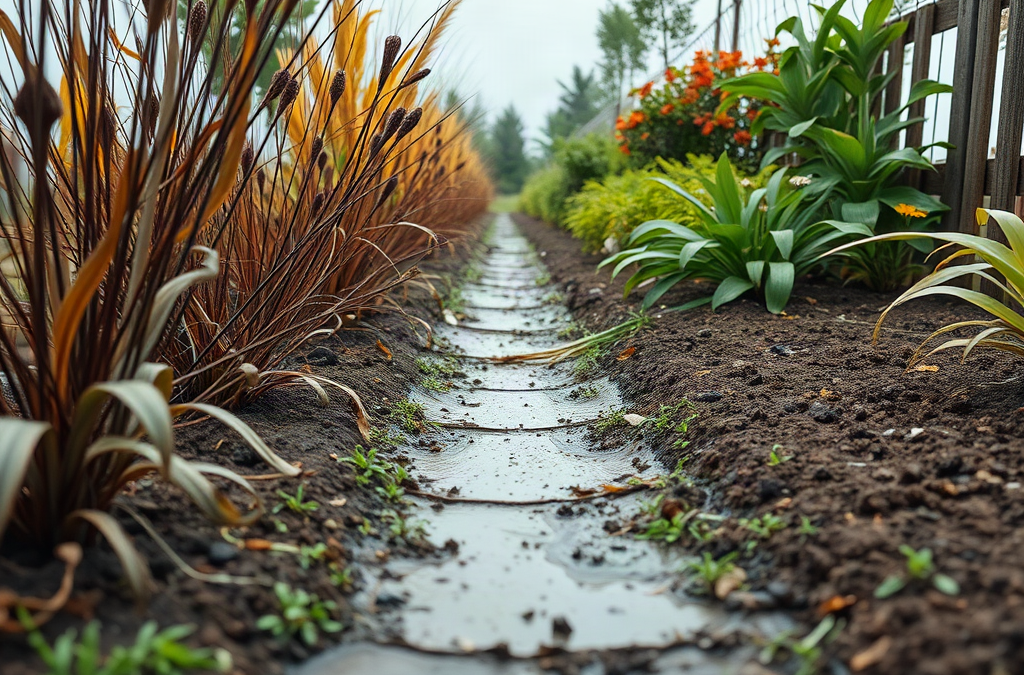
Abiotic gardening problems caused by environmental stress are noninfectious plant injuries triggered by heat, cold, drought, excess water, wind, salinity, compacted ground, or chemical exposure. Symptoms often affect several plants at once and may include leaf scorch, distorted growth, yellowing, sudden wilt, or root decline without clear signs of insects or pathogens. Diagnosis depends on matching the damage pattern with recent weather, irrigation, drainage, and site changes. Correct the active stress first, protect functioning roots and foliage, and avoid reflexively applying pesticides or fertilizer, which can intensify injury when the underlying problem is physical or chemical.
What you’ll learn
This guide covers the following practical points:
- How Environmental Stress Damages Plants — Environmental injury begins when a plant cannot balance water uptake, temperature control, gas exchange, and nutrient movement under the conditions surrounding its roots and leaves.
- Recognizing Abiotic Stress Patterns — Damage distribution often provides a stronger clue than a single leaf symptom.
- Diagnosing the Growing Site — A reliable diagnosis combines plant evidence with a timeline of site conditions.
- Correcting Stress Without Causing More Damage — Correction should reduce the active stress while preserving tissue that can still support recovery.
How Environmental Stress Damages Plants
Environmental injury begins when a plant cannot balance water uptake, temperature control, gas exchange, and nutrient movement under the conditions surrounding its roots and leaves. Drought reduces water available for cooling and cell expansion. Saturated ground displaces oxygen from root pores, limiting root function even though moisture is abundant. High heat raises water loss, while cold can rupture tender tissue or interrupt normal growth.
Different stressors can produce remarkably similar symptoms. A tomato may wilt because its root zone is dry, because waterlogged roots cannot function, or because excessive fertilizer salts are drawing water away from root cells. Treating every wilted plant with more irrigation therefore risks making the actual problem worse. The useful question is not simply what the leaves look like, but whether the site can supply water and oxygen in a form the roots can use.
Salt exposure illustrates this mechanism clearly. Salts may accumulate from fertilizers, deicing materials, saline irrigation water, or poor drainage. Even damp ground can become physiologically difficult for roots to draw from when salt concentration is high. Virginia Tech educational material on abiotic plant stress describes both osmotic effects and direct ion-related injury under saline conditions.
Stressors frequently overlap. Reflected heat beside a wall increases water loss, while compacted subsoil restricts the roots that would otherwise replace that moisture. A quick surface correction may offer temporary relief, but recovery remains limited until the combined pressures are addressed.
Recognizing Abiotic Stress Patterns
Damage distribution often provides a stronger clue than a single leaf symptom. Abiotic injury commonly follows irrigation lines, low areas, pavement edges, frost pockets, windy exposures, or the boundary of a chemical application. Several unrelated species may show damage at roughly the same time because they experienced the same weather or site event.
Look for uniformity and boundaries. Leaf edges scorched across the sunny side of multiple plants suggest heat, wind, or water stress. Yellowing concentrated in a poorly drained depression points toward impaired roots. Twisted new growth appearing shortly after herbicide use nearby may indicate chemical exposure. Mississippi State University Extension lists slow growth, poor foliage color, leaf scorch, limb dieback, and plant death among possible abiotic symptoms in woody plants, but none of those signs identifies a cause by itself.
| Visible Pattern | Likely Stress to Investigate | What to Check |
|---|---|---|
| Brown leaf margins on exposed foliage | Heat, wind, drought, or salt | Root-zone moisture, recent heat, irrigation water, fertilizer use |
| Yellowing and wilt in a low spot | Waterlogging and low root oxygen | Drainage after rain, soil odor, root color and firmness |
| Damage on one side of plants | Sun, frost, wind, or spray drift | Orientation, nearby hardscape, recent weather or applications |
| Stunted growth across a bed | Compaction, unfavorable pH, salinity, or root restriction | Site history, soil structure, drainage, and a suitable soil test |
Do not rule out a living pest merely because environmental stress is present. Drought-stressed or root-damaged plants may become more vulnerable to insects and disease. Check for feeding, webbing, fruiting bodies, lesions, bacterial ooze, or progressive spread between plants. Abiotic damage itself does not reproduce or move from plant to plant, although a shared exposure can make it appear to spread.
Diagnosing the Growing Site
A reliable diagnosis combines plant evidence with a timeline of site conditions. Begin with what changed before symptoms appeared: a freeze, heat wave, irrigation failure, prolonged rain, construction traffic, fertilizer application, repotting, pruning, or nearby spraying. Leaf damage may become visible days after the triggering event, so current conditions alone can be misleading.
Use a short investigation sequence rather than changing several practices at once:
- Map the affected area. Note species, slope, exposure, hard surfaces, and whether healthy plants form a clear boundary.
- Check moisture below the surface. Inspect the active root zone rather than judging by dry mulch or a damp top layer.
- Examine roots and stems. Healthy young roots are generally firm; dark, soft, or poorly developed roots suggest an unfavorable root environment, though pathogens may also be involved.
- Review recent inputs. Confirm fertilizer rates, herbicide use, irrigation-water changes, and any deicing salt or construction material nearby.
- Test only when the result will guide action. A laboratory soil test can clarify pH, soluble salts, and nutrient status, but it will not explain frost injury or poor irrigation coverage.
Container plants require a slightly different reading. A pot may dry rapidly at the edge while remaining saturated near blocked drainage holes. Roots can also overheat in dark containers exposed to afternoon sun. Lift the container, inspect its drainage openings, and feel the mix at more than one depth before deciding that the plant needs additional water.
A common diagnostic failure is treating pale foliage as proof of fertilizer deficiency. Cold, saturated, compacted, or high-pH root zones can restrict nutrient uptake even when nutrients are present. Adding fertilizer raises salt concentration and may further burden damaged roots. Verify the root environment before feeding.
Correcting Stress Without Causing More Damage
Correction should reduce the active stress while preserving tissue that can still support recovery. For dry ground, water slowly enough to penetrate the root zone rather than repeatedly wetting the surface. For saturated ground, stop unnecessary irrigation and redirect runoff where practical; digging around already injured roots can compound oxygen loss and physical damage.
Shade cloth or temporary screening may protect newly transplanted plants during extreme exposure, but dense coverings can trap heat and reduce airflow. Mulch moderates moisture and temperature when spread over the root area, yet mulch piled against stems keeps bark wet and can conceal deterioration. Correct placement matters more than simply adding more material.
Remove clearly broken, dead, or decaying tissue, but postpone heavy pruning of heat-, drought-, or freeze-stressed plants until the extent of live growth is evident. Leaves with cosmetic injury may still photosynthesize. Premature removal reduces the plant’s remaining energy-producing surface and can expose previously shaded branches or fruit to intense sun.
Avoid broad pesticide treatments unless inspection identifies a target organism. Pesticides cannot reverse temperature injury, compaction, salinity, or incorrect watering. Likewise, stimulants and concentrated fertilizers do not rebuild dead roots. Signs that correction is working include stable moisture, firm new growth, normal leaf size, and buds developing beyond the damaged tissue. Continued wilting in moist ground, expanding dieback, foul roots, or new lesions call for reassessment and possibly help from a local extension diagnostic service.
Preventing Repeat Problems
Prevention depends on matching plants to the site’s recurring limits rather than compensating indefinitely for a poor fit. A heat-sensitive plant beside west-facing masonry may require constant intervention, while a species adapted to reflected heat can function with less protection. In a low area that remains wet after rain, improving drainage or selecting moisture-tolerant plants is usually more durable than maintaining a demanding watering schedule.
Build resilience through root-zone management. Apply water according to actual moisture and plant demand, keep traffic off wet beds, maintain drainage outlets, and place mulch without burying crowns or trunks. Grouping plants with similar moisture needs reduces the chance that one irrigation schedule will drown some plants while leaving others dry.
Record damaging events and the location of symptoms. A simple note showing where frost settles, where sprinklers miss, or where summer scorch returns can reveal patterns that are forgotten between seasons. Repeated injury in the same location signals a design problem, not bad luck.
More intervention is not always better. Frequent shallow watering encourages roots near the surface, routine fertilizer can increase salts, and excessive pruning stimulates tender growth vulnerable to heat or cold. Prioritize stable moisture, suitable exposure, adequate root space, and good drainage before adding products. Those conditions govern whether a plant can use nutrients and recover from ordinary weather fluctuations.
Frequently Asked Questions
How can I tell abiotic injury from a plant disease?
Abiotic injury often follows an exposure pattern and appears on several plants at once. Disease may show progressive spread or distinct lesions, spores, ooze, or decay, although laboratory diagnosis is sometimes needed.
Can a plant recover from environmental stress?
Recovery is possible when roots, buds, or stems remain alive and the stress is corrected. Dead leaves and branches will not recover, so judge progress by healthy new growth rather than damaged tissue becoming green again.
Should I fertilize a stressed plant?
Usually not until moisture, drainage, root condition, and soil test information justify it. Fertilizer salts can worsen drought, salinity, and root injury, while stressed roots may be unable to use added nutrients.
Why does a plant wilt when the ground is wet?
Saturated ground can deprive roots of oxygen, reducing their ability to take up water. Root decay, compacted soil, or a damaged stem can produce a similar mismatch between available moisture and water reaching the leaves.
Should environmentally damaged leaves be removed?
Remove leaves only when they are fully dead, decaying, or creating a sanitation problem. Partly damaged green tissue may still support the plant, and extensive removal can increase sun exposure and slow recovery.
Conclusion
Plant symptoms become more useful when they are interpreted alongside location, weather, irrigation, drainage, and recent site changes. Map the damage, inspect moisture and roots, and correct the strongest active pressure before pruning heavily or applying products. Watch new growth rather than expecting injured tissue to recover. When symptoms continue despite improved conditions—or when decay, lesions, or insect evidence appears—seek a local diagnostic assessment instead of assuming the problem remains purely environmental.
Additional Resources
Authoritative Sources
- Chapter 5: Abiotic Stress Effects on Plant Growth and ...
pressbooks.lib.vt.eduTwo problems develop in plants as a result of high saline conditions. One is an osmotic problem due to high salt concentrations in the soil.
- It's Alive! Or Not. Biotic vs. Abiotic Plant Problems
ucanr.eduDec 4, 2025 — For instance, trees suffering from drought stress (abiotic) may be more likely to be attacked by insects (biotic), or root rot pathogens ... Read more
- Guide to Abiotic Disorders of Woody Plants in the Landscape
extension.msstate.eduTypical stress symptoms of abiotic problems include very slow growth, poor foliage color, leaf scorching, presence of lichen, limb dieback, or plant death.


