
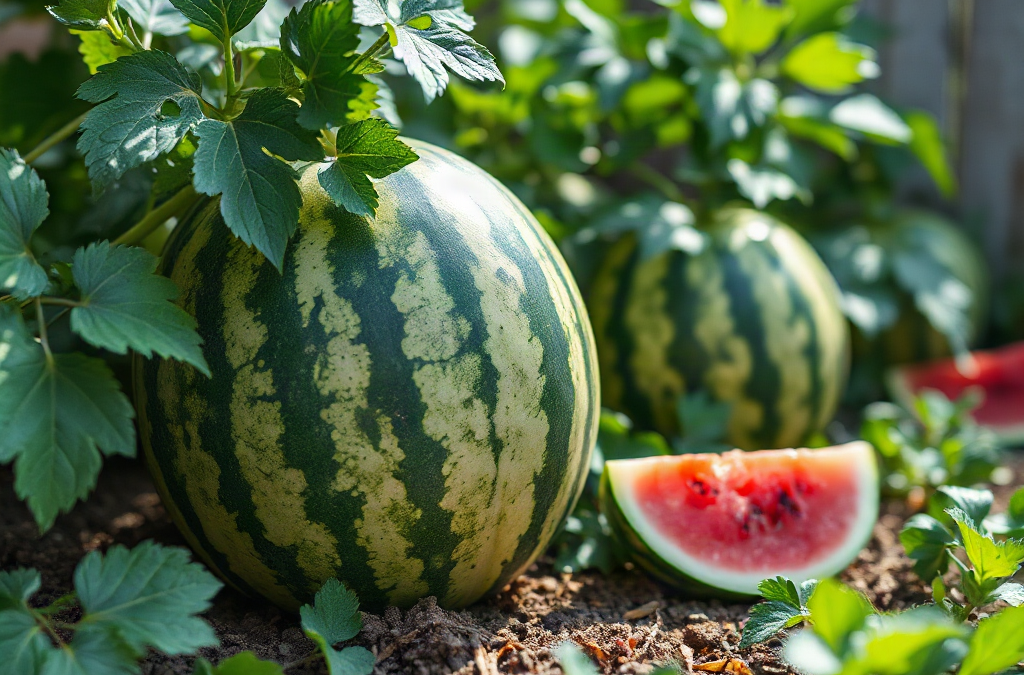
A backyard watermelon garden needs full sun, warm soil, ample vine space, steady moisture, and fertile but well-drained ground to produce healthy vines. Give plants at least 8 hours of direct sunlight and avoid planting until the soil has warmed and frost danger has passed. Water deeply at the root zone, then reduce irrigation as melons approach maturity rather than repeatedly soaking the foliage. Protect pollinators because each developing fruit depends on successful flower pollination.
How Much Space and Sunlight Do Watermelons Need?
Watermelon vines perform best in an open location receiving at least 8 hours of unobstructed sunlight. Light fuels leaf growth and sugar production, while warmth keeps this heat-loving crop developing at a useful pace. A bed shaded during the morning or late afternoon may keep vines alive, but fruit development and sweetness can suffer when the daily light window is too short.
Measure usable ground before choosing a variety. Standard watermelon vines may travel 10 feet or more, although their exact spread varies by cultivar and conditions. Compact or “bush” cultivars occupy less room, but that label does not mean they remain confined to a small pot. Read the seed packet for the expected spread and recommended plant spacing rather than assuming every watermelon grows alike.
A sunny lawn edge, broad raised bed, or unused section beside a vegetable plot can work if the vines have somewhere safe to run. Direct them onto a mulched path or across open soil instead of forcing them through peppers, beans, or other crops. Overlapping watermelon vines are not automatically harmful, but dense foliage mixed with neighboring plants makes watering, pollination checks, and disease inspection more difficult.
Vertical support is an option for smaller-fruited cultivars where ground area is limited. The trellis must be sturdy enough to carry mature vines, and each enlarging melon needs a sling that distributes its weight. Large-fruited cultivars are generally more practical on the ground because their load can overwhelm light fencing or improvised supports. Ground-grown fruit can rest on a board, tile, or thick layer of clean straw to reduce direct contact with wet soil.
Do not crowd several seedlings into one planting hole simply because the bed looks empty at transplanting time. Young plants expand rapidly once temperatures rise. Crowding later restricts airflow and creates a tangled canopy where damaged leaves, pests, and early disease symptoms are easy to miss. The better choice is fewer well-spaced plants with enough leaf area to ripen their fruit.
What Soil Conditions Build Strong Watermelon Vines?
Warm, loose, well-drained soil gives watermelon roots the combination of oxygen, moisture, and heat they need. Cold ground slows early growth, while saturated soil pushes air out of root pores and encourages decline. Wait until frost risk has passed and the soil is reliably warm before sowing or transplanting; warm daytime air alone does not make a cold bed suitable.
Drainage deserves priority over aggressive fertilization. After heavy rain, inspect the intended site. Standing water or soil that remains sticky and saturated for an extended period indicates a poor location unless drainage is improved. A raised bed can help on heavy ground, but it must contain a stable soil blend rather than a shallow pocket of very light material that dries within hours.
Incorporate finished compost before planting to improve structure and supply gradual nutrition. A soil test offers better fertilizer direction than leaf color alone, since pale leaves can result from cold roots, excessive water, compacted ground, or nutrient shortages. Applying more fertilizer without identifying the constraint may intensify the problem.
Too much nitrogen is a familiar watermelon mistake. It can produce a large canopy that looks impressive while flowering and fruiting lag behind. Balanced fertility early in the season supports establishment; once flowering begins, repeated high-nitrogen feeding is usually a poor substitute for adequate sunlight, pollination, and root health. Follow soil-test guidance and product labels rather than adding fertilizer on a fixed weekly schedule.
Watermelons tolerate modest soil variation, but strongly acidic or alkaline ground can restrict nutrient availability. Garden soil near a mildly acidic to neutral range is generally suitable. Testing is especially worthwhile if vegetables have struggled in the same bed, lime has been applied repeatedly, or the property has disturbed or imported soil.
Mulch helps moderate moisture and suppress weeds after the ground has warmed. Organic mulch should be kept slightly away from the crown so the stem base stays dry and visible. Black plastic can warm cool spring soil, but it also limits direct observation and may hold excessive heat in very hot climates. Choose mulch according to the local constraint: warming where summers are short, or moisture conservation where heat and evaporation dominate.
How Should Watermelon Vines Be Watered?
Watermelon roots need deep, reasonably consistent moisture during vine expansion, flowering, and early fruit enlargement. The useful target is a thoroughly moistened root zone followed by enough time for excess water to drain—not permanently wet soil. Irrigation frequency therefore changes with soil texture, rainfall, temperature, mulch, and plant size.
Check the soil below the surface before watering. A dry crust can cover moist soil, especially under mulch, while a bed that looks dark may be saturated underneath. Push a finger or small trowel several inches into the soil near, but not against, the plant. Water when that root-zone soil is beginning to dry rather than relying on a rigid calendar.
Drip irrigation or a soaker hose applies water where roots can use it and keeps most foliage dry. A watering wand also works if it is aimed at the soil and moved slowly enough to prevent runoff. Frequent overhead sprinkling is less efficient in a dense patch and leaves wet foliage, particularly problematic when watering late in the day. If overhead irrigation is the only option, morning use allows leaves to dry sooner.
Two opposing mistakes can produce similar symptoms. Drought may cause midday wilting, stalled fruit enlargement, and dry soil. Waterlogged roots can also leave vines limp because damaged roots cannot function normally. Before responding to wilt with more water, examine the soil. A plant that recovers after the hottest part of the day while its root zone remains moist may be reacting temporarily to heat rather than experiencing drought.
As melons near maturity, avoid abrupt cycles of severe dryness followed by heavy soaking. Large moisture swings can stress plants and may contribute to fruit-quality problems. Irrigation can be moderated as ripening approaches, particularly after rain, but vines should not be deliberately allowed to collapse. The goal is stable soil with less unnecessary water, not forced drought.
A simple field check is more reliable than guessing: note soil moisture before irrigation, observe whether water runs off or sinks in, and recheck the bed later. Persistent puddles signal drainage or application problems. Water disappearing from only the top inch suggests the irrigation was too brief to reach the active root zone.
Pollination, Fruit Development, and Routine Vine Care
Healthy foliage alone does not guarantee melons because watermelon flowers must be pollinated successfully. Early male flowers commonly appear before female flowers, so the first blooms may drop without producing fruit. Female flowers have a small swelling behind the petals. After adequate pollination, that swelling begins enlarging; when pollination is incomplete, it often yellows or stops developing.
Bees and other visiting insects move pollen between flowers. Avoid spraying open blooms or applying insecticides while pollinators are active. When pest treatment is necessary, first identify the pest, select the least disruptive suitable control, and follow the label precisely. Hand pollination can assist a small planting during poor pollinator activity, but it is labor-intensive and less practical across numerous vines.
Once fruit sets, resist the urge to prune heavily. Watermelon leaves manufacture the sugars used by developing melons, so removing broad stretches of healthy foliage reduces the plant’s productive surface. Trim only clearly damaged or diseased material when removal is justified, and use clean tools. Moving vines repeatedly can crack stems or disturb shallow roots, particularly after fruit has gained weight.
Inspect plants at least weekly and more often during hot, humid, or rainy weather. Look beneath leaves and around the crown for chewing, discoloration, stippling, wilting, stem damage, or powdery growth. A single old leaf touching wet soil is different from symptoms spreading through new growth. That pattern—where symptoms begin and how quickly they advance—helps distinguish ordinary aging from a developing pest, disease, or root-zone problem.
Weeds should be removed while small. Mature weeds compete for moisture, obstruct airflow, and make vines harder to inspect, but deep hoeing close to the plant can injure shallow roots. Hand-pull carefully or cut weeds at soil level near the crown. Mulch reduces later disruption if it is installed after the soil warms.
Ripeness should be judged with several signs rather than fruit size alone. The tendril nearest the fruit often dries as maturity approaches, the ground-contact area changes from pale or white toward a creamy yellow, and the rind becomes less glossy. Cultivars differ, so track the expected days to maturity on the seed packet and combine that estimate with visible fruit changes.
A Practical Watermelon Garden Checklist
A useful watermelon plan resolves the fixed constraints before seed goes into the ground. Sun exposure and drainage are difficult to correct once vines cover the bed, while watering hardware, mulch, and vine direction can still be adjusted during the season. Prioritizing the permanent conditions prevents wasted effort on fertilizer or pest products when the site itself is unsuitable.
Use this compact sequence when preparing and maintaining the patch:
- Confirm light: Watch the site across a clear day and choose an area with at least 8 hours of direct sun.
- Match the cultivar to the area: Select compact or smaller-fruited types for restricted beds and standard vines where open ground is available.
- Check drainage and warmth: Avoid persistently saturated ground, and plant only after frost danger has passed and soil has warmed.
- Prepare the root zone: Add finished compost where needed, use soil-test results for amendments, and avoid excessive nitrogen.
- Set up root-level irrigation: Place drip lines or a soaker hose before vines make access difficult.
- Monitor flowers, fruit, and foliage: Protect pollinator activity, check for expanding fruit, and investigate spreading symptoms early.
Signs the plan is working include new vine extension, leaves that remain firm outside peak afternoon heat, active flower visits, and fruit that continues enlarging. Growth naturally varies with temperature, so compare plants over several days rather than expecting visible daily progress during cool spells.
Failure signals call for diagnosis rather than automatic feeding. Consistently wet soil, yellowing that moves into newer leaves, sudden vine collapse, repeated fruit abortion, or no growth during warm conditions deserves closer inspection. Check moisture and stem integrity first, then examine leaf undersides, flowers, and roots where practical. Fertilizer cannot correct poor drainage, low light, damaged stems, or absent pollination.
Backyard growers with limited room should favor one or two well-positioned plants over a crowded assortment. Gardeners in short-season climates gain more from early-maturing cultivars and warmed soil than from selecting the largest-fruited type. In long, hot seasons, moisture stability and protection from root-zone overheating may matter more than extending the growing window.
Frequently Asked Questions
Can watermelons grow with 6 hours of sunlight?
They may grow, but 6 hours is usually a compromise. Choose the sunniest available site and a smaller, early-maturing cultivar; expect slower development or less sweetness than plants receiving at least 8 hours.
How many watermelon plants should a backyard gardener grow?
Base the number on the cultivar’s listed spread, not the empty appearance of the spring bed. One or two properly placed plants often use a substantial area and are easier to inspect than several crowded vines.
Should watermelon vines be pruned?
Routine heavy pruning is unnecessary and removes leaves that supply energy to fruit. Remove badly damaged or diseased material when appropriate, but otherwise guide vines gently and retain healthy foliage.
Why are watermelon flowers falling off without fruit?
The earliest blooms are often male flowers, which naturally drop. Female flowers can also abort after inadequate pollination, heat stress, moisture disruption, or plant stress; check for the small swelling behind the flower and watch pollinator activity.
Can watermelons be grown in raised beds?
Yes, provided the bed has sufficient root depth, does not dry excessively fast, and borders an area where vines can spread. A compact cultivar or sturdy trellis can make a raised-bed planting easier to manage.
Conclusion
Successful watermelon culture begins with choices that are hard to change later: a sunny site, warm and freely draining soil, and enough room for the selected cultivar. Once vines begin running, concentrate on deep root-zone watering, modest soil-test-based fertility, weed suppression, and protection of pollinating insects. Diagnose wilt and yellowing by checking soil moisture before reaching for more water or fertilizer.
Measure the available area, read the cultivar’s spacing and maturity information, and prepare irrigation before planting. During flowering and fruit development, inspect the patch regularly without shifting vines unnecessarily. Steady growth, active flower visits, and enlarging fruit indicate that conditions are aligned; standing water, dense crowding, persistent collapse, or spreading leaf symptoms signal that the underlying site or care routine needs correction.


