
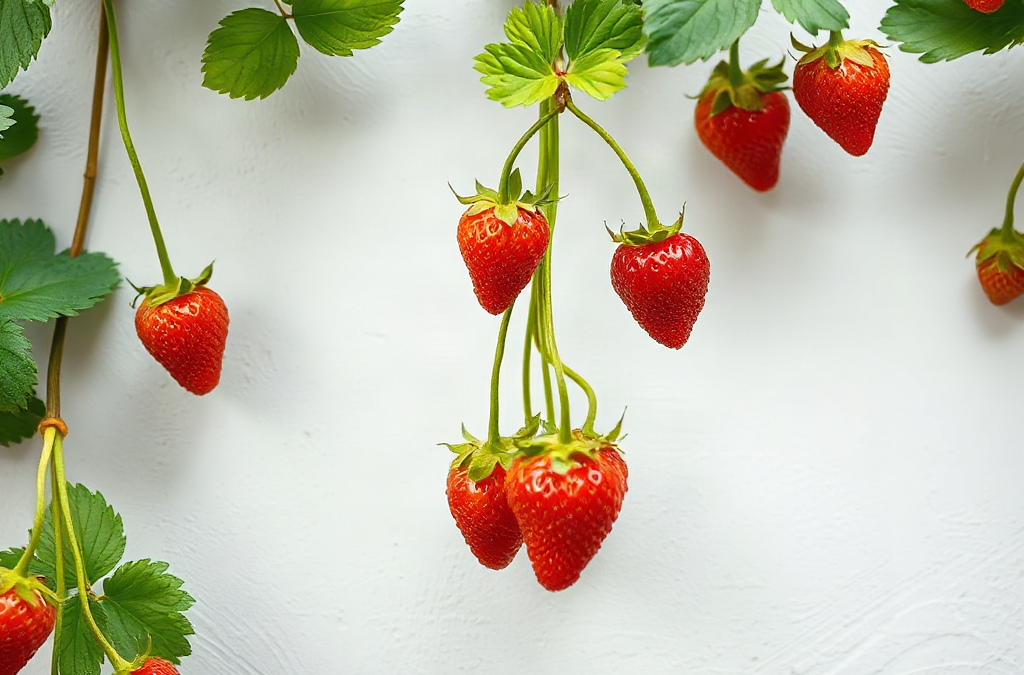
Vertical strawberry garden problems usually arise when a tall planter combines uneven watering, compressed potting mix, weak anchoring, and excessive weight near the top. Support fixes should begin with stabilizing the frame, checking every pocket for moisture, restoring drainage, and securing trailing crowns without pinching their stems. Repositioning emitters or hand-watering each level separately corrects the common pattern of soaked lower plants and dry upper plants. Replace collapsed mix gradually, remove failing foliage, and monitor new leaves, roots, and fruit stems to confirm that structural and growing conditions are improving together.
Why Do Vertical Strawberry Planters Fail?
A vertical strawberry planter fails differently from a conventional raised bed because water, roots, foliage, and weight are distributed across multiple elevations. The top is exposed to sun and wind, the middle may be shaded by upper leaves, and the bottom receives drainage from every level above it. Treating the entire structure as one uniform container hides these differences until plants begin wilting, crowns rot, or the tower leans.
The first useful distinction is whether the problem affects one planting pocket, one level, or the entire structure. A single weak plant may have a buried crown, damaged roots, or a blocked opening. A failing upper tier usually points toward rapid drying or poor water delivery. Widespread pale growth suggests depleted mix, restricted roots, or irrigation that repeatedly washes nutrients downward. A leaning frame, by comparison, is a structural problem even if the plants still look healthy.
Container design can intensify these patterns. Narrow pockets hold little mix and can dry within the same day during hot, windy weather. Deep central columns may remain wet internally while their exposed side openings feel dry. Dark plastic absorbs heat, whereas porous fabric loses moisture rapidly. A free-standing planter becomes top-heavy when upper plants mature, wet foliage adds weight, or fruit hangs beyond the base.
Inspect the planter before changing several things at once. Watering more heavily will not correct a clogged drain, and adding fertilizer will not repair roots that are sitting in air pockets. Work through a short priority check:
- Check stability: Gently test the empty frame or base for rocking, cracked joints, and loose fasteners.
- Compare moisture by level: Feel or probe the mix near the roots at the top, middle, and bottom.
- Inspect crowns: The central growing point should sit above the mix rather than being buried.
- Trace drainage: Confirm that water exits freely instead of pooling in lower pockets.
- Examine new growth: New leaves provide a clearer recovery signal than older damaged foliage.
A common mistake is diagnosing every drooping plant as thirsty. Roots deprived of air can produce similar wilting because they cannot function normally in saturated mix. Check moisture below the surface before watering. That single observation separates a dry upper pocket from a wet lower tier and prevents a corrective action from worsening the actual problem.
How Do You Correct Uneven Watering and Drainage?
Uneven irrigation is corrected by delivering water to each root zone rather than pouring a large volume into the top and expecting gravity to distribute it evenly. Water follows channels, container walls, and compacted areas. It may pass through the center while leaving side pockets dry, then collect around plants at the bottom.
Test the pattern with a slow watering cycle and observe where water emerges. After drainage stops, check the mix several inches apart and at different heights. If the upper pockets are dry but the base is saturated, reduce the amount entering from above and add delivery points farther down. Drip tubing with an emitter serving each tier offers better control than a single top inlet. Hand-watering remains practical for a small tower if each pocket is watered separately and allowed to drain.
Potting mix also determines whether the water spreads or bypasses roots. Old mix can shrink from the container wall, leaving a channel around the edge. Severely dry peat-based material may initially repel water. Apply a modest amount slowly, pause while it absorbs, and repeat rather than flooding the structure. Where the mix has settled below roots, work fresh container mix into accessible gaps without burying the strawberry crowns.
| Observed pattern | Likely cause | Practical correction |
|---|---|---|
| Dry upper pockets, wet base | Gravity-fed watering concentrated at the top | Add separate emitters or water levels individually |
| Water runs down the wall immediately | Shrunken or water-repellent mix | Rehydrate slowly in repeated passes |
| Lower crowns darken or soften | Poor drainage or chronic saturation | Clear outlets and reduce water arriving from above |
| One pocket stays dry | Blocked emitter, root-bound mix, or an air gap | Inspect the outlet and restore contact around the root ball |
Drainage holes must remain open and positioned where runoff cannot re-enter lower pockets. A saucer may protect a deck, but standing water should not cover the planter’s bottom outlets. Elevating the base slightly on stable feet can preserve drainage, provided the change does not make the tower easier to tip.
Signs of improvement include moisture that feels comparable at matching root depths, less midday collapse, and firm new leaves. Constantly wet mix, algae around openings, sour odors, or recurring fungus gnats indicate that the adjustment has gone too far. The goal is even access to moisture with enough drainage for air to return to the root zone—not permanent dampness at every level.
How Do You Stabilize the Tower and Support the Plants?
A tall strawberry structure needs two separate forms of support: a stable load-bearing frame and gentle guidance for leaves, runners, and fruit stems. Plant ties cannot compensate for a rocking base, while a securely anchored tower does not protect berries that rub against rough edges or hang on sharply bent stems.
Begin with the structure unloaded or as light as practical. Place it on a firm, level surface and inspect its joints, stacking connections, wall brackets, and base. A broad footprint resists tipping better than a narrow pedestal. If anchoring to a wall or fence, use fasteners and hardware appropriate for that surface and for outdoor exposure. Do not rely on a decorative trellis, gutter, railing, or weak cladding to carry a wet planter unless it is designed for that load.
Wet potting mix weighs far more than dry mix, and mature foliage catches wind. Those forces matter most on balconies, elevated decks, and exposed patios. A freestanding tower that seems steady indoors can sway outdoors after irrigation. Positioning it close to a sound wall can reduce wind exposure, but leaves still need airflow and light. If the only secure location is deeply shaded, a lower, wider planter may be a better choice than forcing a tall design into unsuitable conditions.
Support individual plants with soft, wide ties or small clips placed loosely around leaf-stem clusters, never tightly around the crown. Strawberry flower stalks naturally arch as berries gain weight; they should be lifted only enough to prevent abrasion, soil contact, or entanglement. A small mesh shelf, clean sling, or smooth rim guard can carry fruit without pulling on the stalk. Inspect supports weekly because stems expand and runners shift position.
Runners present a choice rather than an automatic problem. Remove them when the priority is fruit production and the tower has no room for daughter plants. If propagation is intended, pin selected daughter plants into adjacent pockets only after confirming that the parent is vigorous and the receiving pocket has adequate mix. Allowing every runner to root creates crowding, uneven weight, and hidden moisture pockets.
The usual structural mistake is adding counterweight at the top or hanging accessories from the frame. Extra upper mass raises the center of gravity and increases leverage during wind. Secure the base or structural attachment instead. A successful fix leaves the unit motionless under a gentle push, keeps drainage paths open, and supports fruit without constricting living tissue.
Repairing Root Crowding, Weak Growth, and Fruit Damage
Weak growth in a vertical system often reflects limited root volume rather than a single missing input. Strawberry roots compete within confined pockets, especially when several crowns share one opening or runners have rooted wherever they touched moist mix. Adding more fertilizer to a crowded, poorly aerated root zone can increase salt stress without giving roots additional space.
Lift or slide out an accessible root ball to assess it when one pocket repeatedly dries faster than neighboring pockets. Dense roots circling the opening, very little visible mix, or water that passes straight through are signs that the plant needs renewal. Depending on the planter design, move the plant into a larger pocket, divide only independently rooted daughter plants, or renovate the entire level after fruiting. Avoid tearing apart actively fruiting crowns unless decline is severe; root disturbance can interrupt water uptake when berries and leaves are demanding the most moisture.
Crown position deserves close attention during any repair. The crown is the compact point from which leaves emerge. Burying it encourages persistent moisture around vulnerable tissue, while setting it too high exposes roots. Refill around the roots and firm the mix lightly so the crown remains at the surface. Heavy compression removes the air spaces needed for drainage and makes future irrigation less predictable.
Fruit damage may come from contact rather than disease. Berries resting against damp mix, abrasive plastic, or neighboring fruit remain wet longer and can bruise as the tower moves. Redirect flower stems over a smooth edge, remove damaged fruit promptly, and thin obstructive dead leaves. Do not strip healthy foliage indiscriminately; leaves fuel fruit development and shade berries during intense sun.
Nutrition should be adjusted only after moisture and root space are reasonably stable. Containers lose nutrients through drainage, but stressed roots do not respond well to concentrated feeding. Follow the label for a fertilizer intended for edible container plants, applying it to moist mix rather than a bone-dry root zone. More product is not a shortcut to stronger support or larger roots.
Evaluate repairs through new growth rather than expecting old leaves or scarred fruit to recover. Emerging leaves should open without immediate collapse, fresh flowers should remain supported, and watered pockets should drain without staying sodden. Continued crown softening, stalled growth, or roots with extensive decay may justify replacing the affected plant and its mix. Isolating one failing pocket is often preferable to dismantling a stable tower whose other plants are performing normally.
Frequently Asked Questions
Why do the strawberries at the top wilt first?
Upper pockets receive more wind and sun and hold less runoff from other levels. Check their root-zone moisture directly, then add a dedicated emitter or water those pockets separately.
Can a leaning strawberry tower be fixed without removing the plants?
Minor movement may be corrected by leveling and anchoring the base, but cracked joints or a failing frame should be unloaded before repair. Wet mix and mature plants make an unstable tower hazardous to handle.
Should strawberry plants be tied upright?
Do not force the crown or leaf stems upright. Use loose, soft supports only to guide fruit stalks and runners away from abrasive edges, standing water, or crowded openings.
Why is the bottom of a vertical planter always wet?
Lower pockets collect runoff from above and may drain more slowly. Clear the outlets, stop relying solely on top watering, and deliver smaller amounts directly to individual tiers.
When should the potting mix be replaced?
Replace or refresh it when it has collapsed, no longer absorbs evenly, remains waterlogged, or contains too little mix around dense roots. Renovating after fruiting usually causes less disruption than repotting during peak production.
Conclusion
Successful repairs begin with diagnosis by level: compare moisture, crown position, drainage, root space, and frame movement at the top, middle, and bottom. Correct safety and stability concerns before adjusting irrigation or feeding. Then distribute water to individual root zones, reopen blocked drainage, and restore settled mix without covering the crowns.
Use plant supports to protect fruit and guide runners, not to hold together an unstable structure. New leaves, balanced moisture, free drainage, and a frame that stays still are more reliable signs of recovery than the appearance of older damaged foliage. If one pocket continues to decline, replace or renovate that pocket rather than disrupting every healthy plant. A lower, broader container is the sensible alternative when the available site cannot safely anchor a tall, wind-exposed tower.


