
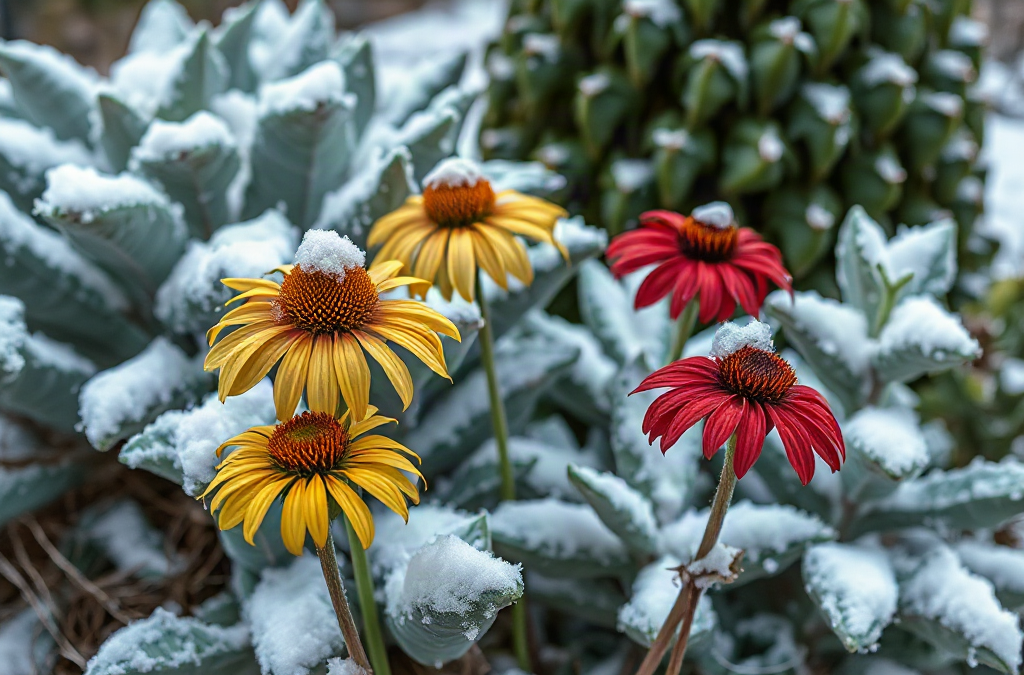
Plants that survive winter outdoors include cold-hardy perennials, shrubs, trees, bulbs, and selected vegetables suited to the local USDA hardiness zone. Survival depends on more than minimum temperature: drainage, wind exposure, freeze-thaw cycles, root protection, and autumn establishment all affect whether a plant returns in spring. Reliable choices include coneflower, sedum, hosta, peony, juniper, serviceberry, daffodils, kale, and garlic, although suitability varies by climate. Choose plants rated at least as cold-hardy as the site, protect containers and shallow roots, and avoid late fertilizing or pruning that encourages vulnerable new growth.
What you’ll learn
This guide covers the following practical points:
- What Winter Survival Really Means — A plant can survive outdoors without remaining green or attractive all season.
- Dependable Outdoor Plants by Type — Reliable winter plants span several growth habits, so the best choice depends on whether the site needs seasonal flowers, permanent structure, ground coverage, or food.
- Match Plants to Local Conditions — The USDA Plant Hardiness Zone Map is a useful first filter because it classifies locations by average annual extreme minimum temperature.
- Prepare Plants Before Cold Weather — Winter preparation should protect roots and conserve moisture without keeping crowns wet.
What Winter Survival Really Means
A plant can survive outdoors without remaining green or attractive all season. Herbaceous perennials such as hostas and coneflowers die back to protected crowns and roots, deciduous shrubs shed their leaves, and spring bulbs remain dormant below ground. Browning foliage is therefore not proof of death. The useful test is whether the crown, roots, buds, or woody stems remain viable until growth resumes.
Cold hardiness describes a plant’s ability to tolerate low temperatures, but the temperature printed on a label is not a guarantee. A specimen at the cold edge of its range may survive beside a sheltered south-facing wall yet fail in an exposed low spot. Wind removes moisture from evergreen foliage, standing water deprives roots of oxygen, and repeated thawing can lift shallow-rooted plants from the ground.
Snow often benefits established plants by insulating the soil and moderating abrupt temperature changes. Bare ground exposed to alternating sun and hard freezes can be more damaging than consistently frozen soil beneath snow. A common mistake is choosing by appearance alone and ignoring whether the roots need dry, freely draining ground or reliably moist soil.
Hardiness also differs from heat tolerance. A plant capable of enduring a very cold dormant season may struggle through hot, humid summers. Long-term success requires a match for both ends of the local climate, not merely the coldest expected night.
Dependable Outdoor Plants by Type
Reliable winter plants span several growth habits, so the best choice depends on whether the site needs seasonal flowers, permanent structure, ground coverage, or food. The examples below are broadly cold-tolerant, but individual species and cultivars can have different ratings.
| Plant group | Useful examples | Winter behavior | Main site requirement |
|---|---|---|---|
| Flowering perennials | Coneflower, peony, hosta, daylily | Top growth usually dies back | Healthy crown and suitable drainage |
| Succulents and ground covers | Stonecrop, hens-and-chicks, creeping thyme | May remain visible or partly dormant | Sharp drainage, especially during thaws |
| Evergreen shrubs | Juniper, yew, selected boxwoods | Foliage remains through the season | Protection from drying wind where needed |
| Deciduous shrubs and small trees | Serviceberry, ninebark, redtwig dogwood | Leaves drop; buds remain dormant | Enough root space and correct moisture |
| Hardy bulbs | Daffodil, crocus, allium | Dormant underground | Planting depth and soil that does not stay soggy |
| Edible plants | Kale, garlic, chives, horseradish | Varies from leafy growth to root dormancy | Climate-appropriate timing and protection |
Peonies and daffodils are useful where a dormant winter appearance is acceptable. Junipers provide year-round form but can suffer when exposed foliage loses water while frozen soil prevents root uptake. Kale may continue producing in comparatively mild conditions, whereas garlic normally establishes roots in fall and resumes visible growth later.
Do not assume every named plant has identical hardiness. A garden center may sell several boxwoods or lavenders with substantially different tolerances. Check the full botanical name and cultivar label before treating one example as interchangeable with another.
Match Plants to Local Conditions
The USDA Plant Hardiness Zone Map is a useful first filter because it classifies locations by average annual extreme minimum temperature. Select a perennial plant rated for the site’s zone, preferably with some cold margin when it will occupy an exposed bed or container. Zone information does not account for waterlogged soil, winter rain, salt spray, shade, or drying winds.
Evaluate the planting spot at ground level. Cold air settles in low areas, snowplows deposit salty snow near pavement, and downspouts create saturated pockets. A hardy sedum may handle an open, cold slope but rot beside a poorly drained foundation. A moisture-tolerant redtwig dogwood may be a better fit for a damp area, provided the selected variety is suitable for the region.
Use this short priority check before buying:
- Confirm hardiness: Compare the species or cultivar rating with the local zone.
- Inspect winter drainage: Avoid species prone to crown or root rot where water collects.
- Assess exposure: Account for prevailing wind, reflected sun, road salt, and snow loads.
- Check mature size: Crowding against walls or paths creates later pruning and airflow problems.
- Consider summer conditions: Confirm that heat, humidity, and sunlight also suit the plant.
Microclimates can extend the range of a borderline plant, but they should be treated as an experiment rather than a certainty. A protected courtyard may stay warmer, while a sunny wall can trigger early bud activity followed by freeze injury. For an expensive or irreplaceable specimen, choosing a plant comfortably within the local range is the lower-risk decision.
Prepare Plants Before Cold Weather
Winter preparation should protect roots and conserve moisture without keeping crowns wet. Newly installed perennials, shrubs, and trees need time to establish before the ground freezes. If autumn remains dry, water deeply until the soil freezes, particularly around evergreens. Saturating already wet ground is counterproductive because cold, oxygen-poor soil encourages root decline.
Apply mulch after the ground begins cooling, keeping it loose and away from trunks, woody stems, and perennial crowns. Mulch moderates soil temperature and reduces heaving; piling it against bark creates a damp refuge for decay and rodents. Fallen leaves can provide insulation when shredded or held in place, but dense, matted layers may smother low plants and retain excess moisture.
Stop high-nitrogen feeding late enough to avoid a flush of tender growth before cold weather. Likewise, postpone major pruning of most woody plants unless broken, diseased, or hazardous branches require attention. Fresh cuts and stimulated growth offer no advantage as dormancy approaches, and pruning spring-flowering shrubs at the wrong time can remove flower buds.
Protect broadleaf evergreens and recently planted specimens from prevailing wind with a breathable screen positioned around—not tightly wrapped against—the plant. Plastic touching foliage can trap heat on sunny days and restrict airflow. The signs of good preparation are stable mulch, moist but not saturated soil, intact bark, and no repeated lifting of crowns after thaws.
Containers and Signs of Winter Damage
Container plants face colder, faster-changing root temperatures than the same plants in the ground. A species rated for the local zone may still lose roots when its pot freezes from every side. Choose plants hardier than the local minimum, use frost-resistant containers with open drainage holes, and group pots in a sheltered location away from persistent wind.
Large containers buffer temperature shifts better than small ones. Insulating the outside of a pot or placing it within a larger container can reduce exposure, but insulation cannot correct waterlogged mix. Terracotta and other porous materials may crack when saturated and frozen. Moving a dormant pot into an unheated garage can be useful if the plant remains cold enough for dormancy and the root ball is checked occasionally rather than forgotten.
Wait before declaring an outdoor plant dead. Evergreen foliage may bronze, perennial crowns may remain invisible, and woody stems may show delayed bud break. Once normal spring growth should be underway, inspect buds and gently scratch a tiny area of young bark; green, moist tissue suggests that the stem is alive. Prune confirmed dead wood back to healthy tissue after the extent of damage becomes clear.
Failure is more likely when stems are black and soft, crowns pull away with no firm roots, bark is split around the base, or no buds swell well beyond the plant’s normal emergence period. Avoid forcing recovery with heavy fertilizer. Correct drainage, maintain moderate moisture, and allow surviving tissue to produce growth before deciding whether replacement is necessary.
Conclusion
Successful outdoor overwintering begins with the cultivar label and the planting site, not with emergency covering after a freeze arrives. Check local hardiness, drainage, wind, winter moisture, and container exposure before choosing a plant. Prepare established roots with sensible watering and loose mulch, then allow dormant specimens time to respond in spring. When a site repeatedly loses plants, replace borderline selections with hardier species rather than adding increasingly elaborate protection.
Frequently Asked Questions
What plants stay green outdoors all winter?
Junipers, yews, selected boxwoods, some hollies, and certain ground covers can remain green, but suitability depends on local hardiness, wind, moisture, and the exact species or cultivar.
Can potted perennials survive outdoors in winter?
Yes, but exposed roots are more vulnerable than roots in the ground. Use a sufficiently hardy plant, a large frost-resistant pot, free-draining mix, and a sheltered position.
Should outdoor plants be watered during winter?
Water during unfrozen, dry periods when the root zone is becoming dry, especially for new plantings and evergreens. Do not water frozen or saturated soil.
Does covering a plant prevent freeze damage?
A breathable cover can reduce damage from a brief cold event, but it cannot make a tender plant reliably hardy. Anchor covers to the ground and remove or vent them when temperatures moderate.
When should winter-damaged growth be cut back?
Wait until spring growth reveals the living tissue, then remove dead stems with clean tools. Earlier pruning can remove viable wood or expose more tissue to cold.


