
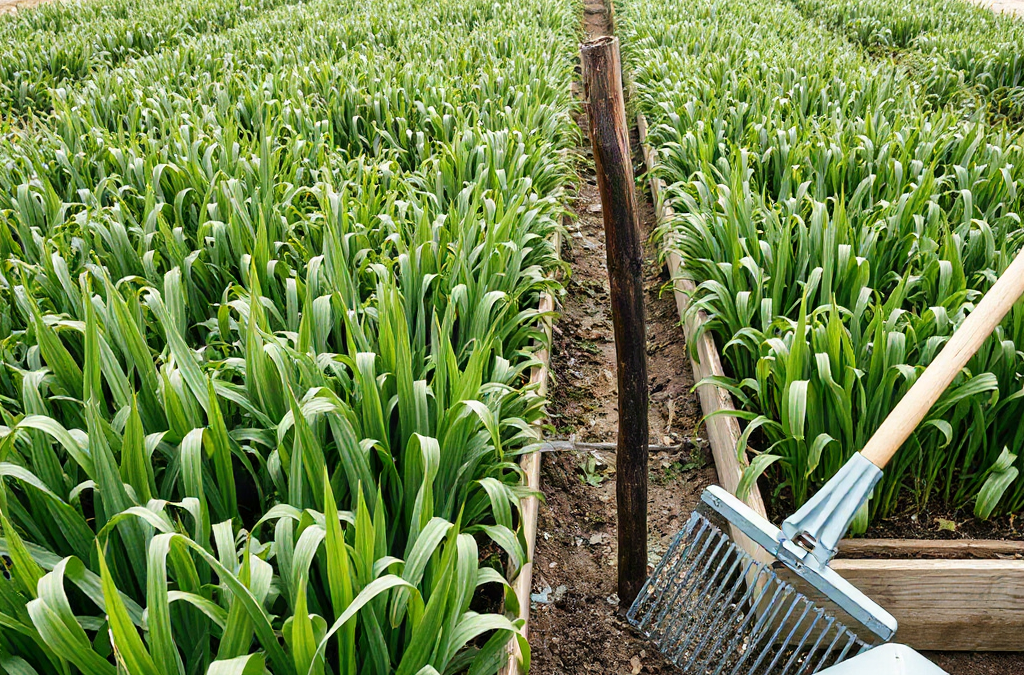
Winter rye planting uses and care center on establishing a cold-tolerant cereal crop that protects bare ground, captures leftover nutrients, suppresses weeds, and produces spring biomass. Sow cereal rye into a prepared seedbed in late summer or fall, using good seed-to-soil contact and enough moisture for prompt germination. Its dense roots reduce erosion, while the aboveground growth can become mulch or organic matter after termination. Care is modest, but delayed seeding, excessive nitrogen, poor termination timing, and allowing seed heads to mature can create avoidable problems.
What you’ll learn
This guide covers the following practical points:
- Where Winter Rye Fits in the Garden — Winter rye, also called cereal rye, is a cool-season grain grown primarily as a cover crop rather than as lawn grass.
- When and How to Sow Winter Rye — Seed winter rye early enough to develop roots before prolonged freezing, while recognizing that it tolerates later fall sowing better than many alternatives.
- Winter and Spring Care — Established rye generally needs little attention during winter.
- Termination and the Next Crop — Termination should be selected according to the crop that follows, not simply according to rye height.
Where Winter Rye Fits in the Garden
Winter rye, also called cereal rye, is a cool-season grain grown primarily as a cover crop rather than as lawn grass. Its ability to germinate in cool conditions makes it useful after summer vegetables finish, when the window for establishing many other cover crops has already narrowed.
The fibrous root system holds loose soil and occupies pore spaces that might otherwise remain exposed through winter. Above ground, the foliage softens the impact of rain and slows surface runoff. Rye also takes up available nitrogen that could move below the root zone, holding some of it in plant tissue until that material decomposes.
Choose rye when the main priorities are winter cover, spring mulch, weed competition, or adding carbon-rich residue. A vegetable bed harvested in September, for example, can be seeded promptly instead of being left bare until May. Rye is less convenient in beds needed for very early spring sowing because established plants can produce substantial roots and stems before the next crop goes in.
Rye residue has a relatively high carbon content, especially after stems become tall and coarse. That makes it persistent enough for surface mulch, but decomposition may temporarily tie up nitrogen near the surface. Legumes such as hairy vetch are sometimes mixed with rye to add nitrogen, although mixtures complicate seeding rates and termination. A common mistake is assuming rye itself supplies nitrogen; it captures existing nitrogen but does not fix atmospheric nitrogen.
When and How to Sow Winter Rye
Seed winter rye early enough to develop roots before prolonged freezing, while recognizing that it tolerates later fall sowing better than many alternatives. A practical target is roughly four to six weeks before the usual hard freeze. Later seeding may survive, but it normally creates less fall growth and provides weaker winter ground cover.
Remove crop debris and perennial weeds, then loosen or rake the top layer of soil. Drilled seed is commonly placed about 3/4 to 1 1/2 inches deep. In a home bed, broadcast seed evenly, rake it into the surface, and firm the ground with the back of a rake or a light roller. Consistent contact between seed and moist soil matters more than leaving the bed finely pulverized.
| Planting method | Typical seeding range | Practical consideration |
|---|---|---|
| Drilled field stand | About 60–90 pounds per acre | Efficient placement can support a lower rate |
| Broadcast field stand | About 90–120 pounds per acre | Use the higher range when incorporation is uneven |
| Hand-sown garden bed | About 2–3 pounds per 1,000 square feet | Divide seed into two passes made at right angles |
These are working ranges rather than universal prescriptions. Seed size, germination percentage, intended use, sowing date, and local extension guidance can justify adjustments. A thinner stand may be adequate for erosion control, while stronger weed competition generally requires uniform coverage.
Water after sowing if the surface is dry and irrigation is available. Keep the seeded layer moist until emergence without saturating it. Rye usually needs little fertilizer in a garden with ordinary residual fertility; adding generous nitrogen in fall can create excessive growth and increase the chance of lodging. Leaving broadcast seed uncovered is the more frequent failure because birds, drying, and poor soil contact reduce establishment.
Winter and Spring Care
Established rye generally needs little attention during winter. Its foliage may remain green, become dull or flattened after severe weather, or pause growth during cold periods. A stand that looks inactive in midwinter can resume quickly as temperatures rise, so appearance alone is not a reliable reason to reseed.
Check the bed after heavy rain for bare strips, standing water, or seed that washed downhill. Small gaps are usually acceptable, but broad exposed areas may need reseeding if enough growing time remains. Persistent puddling points to drainage or compaction trouble that the cover crop cannot correct by itself.
Spring growth should be monitored weekly once conditions warm. The management window changes rapidly as rye shifts from leafy growth to stem elongation and seed-head development. Young plants are tender and easier to cut or incorporate; mature stems are tougher, contain more carbon, and break down slowly.
Do not allow irrigation habits from summer vegetables to continue automatically. Spring rye often uses stored soil moisture vigorously, which can be useful in a wet bed but undesirable before a rain-fed crop. Terminating it earlier conserves more moisture. Letting it grow longer produces additional mulch and roots, but may leave the next planting with a drier, harder-to-manage seedbed.
Watch neighboring beds and paths for unwanted plants. Cereal rye is not the same as perennial ryegrass, but it can reseed if mature heads are left standing. The preventable mistake is treating flowering as harmless decoration and postponing removal until viable grain has formed.
Termination and the Next Crop
Termination should be selected according to the crop that follows, not simply according to rye height. Small-seeded vegetables need a clean, settled seedbed, while transplanted tomatoes, squash, or brassicas can be placed through managed residue more readily.
For incorporation, cut or mow the rye and mix the material into the upper soil while stems are still manageable. Allow roughly two to three weeks before direct sowing where the schedule permits. This interval gives residue time to begin decomposing and reduces physical interference with seed placement. Cool soil, mature stems, and large amounts of biomass can lengthen the process.
For surface mulch, cut plants close to the ground and leave the residue in place. A mower, scythe, string trimmer, or hand shears may work in a small space, but regrowth is possible if plants are cut while still young. Rolling or crimping is most dependable after rye reaches the flowering stage, and it is less reliable when attempted too early.
Rye can suppress germination through heavy shading, a physical mulch barrier, and naturally occurring compounds released from its residue. Those effects are useful against weeds but may also hinder small crop seeds. Transplants are usually a better fit for a thick rye mulch than carrots, lettuce, or other crops that must emerge through the residue.
Use the following order when planning spring removal:
- Set the intended date and method for planting the next crop.
- Decide whether the rye will be incorporated, removed, or retained as mulch.
- Inspect soil moisture and rye maturity before cutting.
- Terminate before seed becomes viable unless intentional grain production is planned.
- Watch for regrowth and remove surviving crowns before they compete with the crop.
The most common failure is waiting for maximum biomass without accounting for the equipment available. A dense, shoulder-high stand is valuable only if it can be cut and managed. Gardeners using hand tools should usually act earlier than growers equipped with a flail mower, roller-crimper, or tillage equipment.
Frequently Asked Questions
Is winter rye the same as ryegrass?
No. Winter or cereal rye is the grain species Secale cereale. Annual and perennial ryegrasses are different grasses with different growth habits and management requirements.
Can winter rye be planted after the first frost?
It can often be sown after a light frost if the soil remains workable, but late planting produces less fall cover. Earlier sowing gives roots more time to establish.
Does winter rye need fertilizer?
Cover-crop rye often grows on residual fertility and may need no added fertilizer. Excess nitrogen encourages lush growth, so base any amendment on soil conditions and the stand's purpose.
When should winter rye be cut down?
Cut it young for easier incorporation or near flowering for longer-lasting surface mulch. Finish termination before viable seed develops unless harvesting grain is intentional.
Can vegetables be planted directly into rye residue?
Large transplants can often be set through an even, well-terminated mulch. Direct-sown vegetables perform better after residue is removed, incorporated, or given time to settle and decompose.
Conclusion
Winter rye earns its place where bare fall ground needs protection and spring residue can be managed deliberately. Sow it uniformly, secure contact with moist soil, and avoid unnecessary nitrogen. Before spring growth accelerates, match the termination stage to the next crop and the tools available. Earlier removal favors easy incorporation and moisture conservation; later removal favors heavier mulch. Prevent seed formation, check for regrowth, and give direct-sown vegetables a clean, settled planting zone.


