
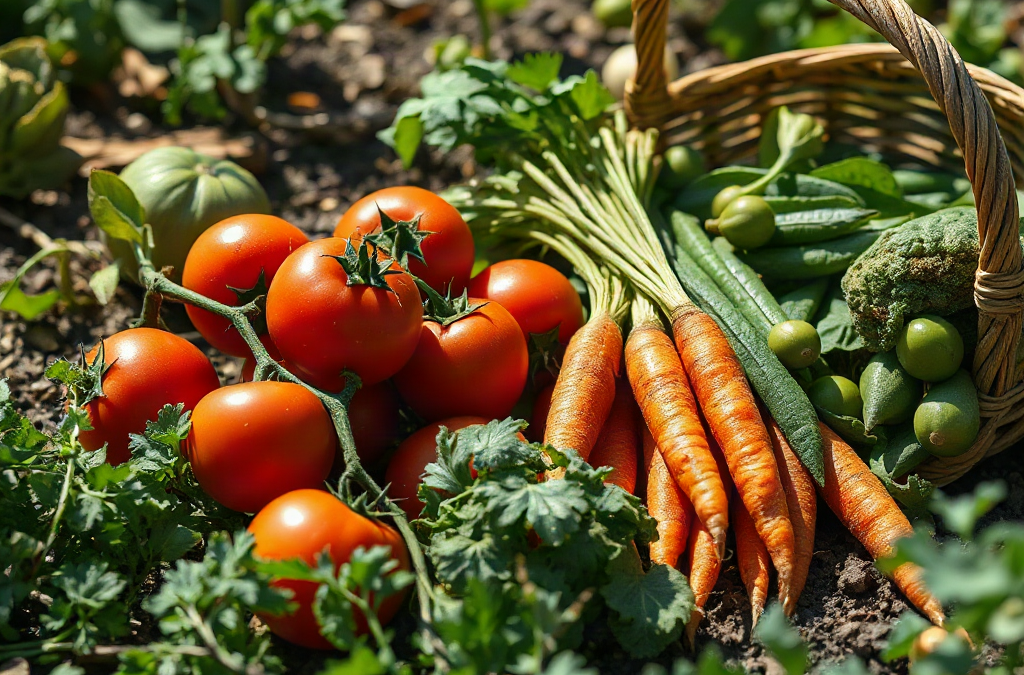
Improve the flavor of homegrown vegetables by choosing flavorful varieties, giving each crop suitable sunlight and nutrition, watering consistently, and harvesting at the right maturity. Excess nitrogen can produce lush leaves but muted tomatoes, roots, and fruit, while irregular moisture may cause bitterness, cracking, or diluted flavor. Letting tomatoes ripen fully, picking peas before they become starchy, and harvesting leafy greens during cool hours preserves their best qualities. Match irrigation and harvest timing to the crop rather than withholding water indiscriminately, because severe drought stresses plants and reduces quality instead of concentrating flavor.
What you’ll learn
This guide covers the following practical points:
- Choose Varieties for Flavor, Not Just Yield — Genetics set the flavor potential before a seed is planted.
- Balance Sunlight, Soil, and Fertility — Healthy flavor development depends on enough light and balanced growth.
- Manage Water Without Stressing Plants — Consistent moisture usually produces better texture and more dependable flavor than alternating drought and saturation.
- Harvest Each Crop at Peak Flavor — Harvest maturity has a stronger effect on eating quality than many last-minute cultivation tricks.
Choose Varieties for Flavor, Not Just Yield
Genetics set the flavor potential before a seed is planted. Two tomato cultivars grown in the same bed can differ markedly in sweetness, acidity, aroma, texture, and skin thickness. Seed descriptions that emphasize shipping durability, uniformity, or very high yields may not identify the variety that tastes best at the table. Look instead for specific flavor descriptions and varieties suited to your climate and intended use.
Match the cultivar to how you plan to eat it. A dense paste tomato is useful for sauce but may seem dry in a sandwich, while a juicy slicer is less efficient for cooking. Small carrots bred for early harvest can be tender and sweet, whereas storage carrots develop size and durability. For lettuce and radishes, heat-tolerant varieties are valuable where spring turns warm quickly because delayed bolting usually means a longer period of mild flavor.
Run a small comparison rather than replacing an entire crop on a seed-catalog promise. Grow two or three cultivars under similar conditions, label them carefully, and taste them at equivalent maturity. Record flavor, texture, yield, and resistance to local problems. Saving seed can preserve a favored open-pollinated variety, but seed from hybrids does not reliably reproduce the parent plant. The common mistake is treating cultivation as the only flavor lever when the chosen cultivar never had the desired eating quality.
Balance Sunlight, Soil, and Fertility
Healthy flavor development depends on enough light and balanced growth. Fruiting crops such as tomatoes, peppers, cucumbers, and melons generally produce their best crops in strong direct sun. Plants in excessive shade may survive and look healthy but yield fewer, later, or less fully developed fruits. Leafy vegetables tolerate more shade, particularly during hot weather, though very low light can still produce thin, weak growth.
Fertilizer should correct a need rather than force rapid growth. Too much nitrogen encourages large leaves and soft growth at the expense of roots, flowers, or fruit. It can also delay maturity, leaving gardeners with impressive plants and disappointing harvests. A soil test is more useful than guessing because it shows pH and nutrient conditions before amendments are added. Compost improves soil structure and nutrient supply, but repeated heavy applications can also create nutrient excesses.
Use crop appearance as supporting evidence, not as a substitute for testing. Pale older leaves and weak growth may indicate a shortage, but damaged roots, cold soil, excessive moisture, and unsuitable pH can create similar symptoms. Applying more fertilizer without identifying the constraint may worsen the imbalance.
- Prioritize sunlight: Reserve the brightest space for crops that flower and fruit.
- Test before amending: Adjust pH and nutrients from measured results when possible.
- Feed moderately: Avoid repeated high-nitrogen applications once fruiting begins.
- Protect soil biology: Add organic matter in reasonable amounts and avoid waterlogged conditions.
A useful sign of balance is steady growth with normal-sized leaves, successful flowering, and produce that matures on schedule. Very dark, oversized foliage paired with few flowers often signals that nitrogen or shade is directing too much energy into leaves.
Manage Water Without Stressing Plants
Consistent moisture usually produces better texture and more dependable flavor than alternating drought and saturation. Roots need both water and oxygen. Frequent shallow sprinkling encourages roots near the surface, while deep watering followed by an appropriate drying interval builds a larger usable root zone. Mulch slows evaporation and reduces the sudden moisture changes that contribute to tomato cracking and misshapen roots.
The advice to withhold water for more concentrated flavor is easy to misuse. Moderate irrigation control near tomato ripening may reduce overly watery growth under some conditions, but severe stress limits photosynthesis, causes blossom drop, toughens certain crops, and raises the risk of blossom-end rot when calcium movement is disrupted. Cucumbers, lettuce, celery, radishes, and many root crops are especially likely to lose quality when moisture becomes erratic.
| Crop Group | Moisture Priority | Flavor or Quality Risk |
|---|---|---|
| Tomatoes and peppers | Even moisture with good drainage | Cracking, blossom-end rot, or diluted growth after sudden heavy watering |
| Leafy greens | Reliable moisture during active growth | Tough leaves and stronger bitterness under heat and drought |
| Carrots and radishes | Steady moisture through root expansion | Woody texture, splitting, or excessive pungency |
| Peas and beans | Avoid stress during flowering and pod fill | Poor pod development and coarse texture |
Check the soil below the surface instead of watering by calendar alone. Insert a finger or small trowel several inches into the root zone and irrigate when that layer is beginning to dry, accounting for soil type and recent rain. Sandy soil needs attention more often than clay soil, while containers can dry much faster than either. Wilting every afternoon, splitting after rain, or repeated swings between dusty and saturated soil indicate that the schedule needs adjustment.
Harvest Each Crop at Peak Flavor
Harvest maturity has a stronger effect on eating quality than many last-minute cultivation tricks. Vegetables do not share one definition of ripe: tomatoes develop color and aroma, snap beans are best before seeds bulge strongly, summer squash is tender while young, and peas become starchy when left on the vine too long. Waiting for maximum size often trades tenderness and sweetness for fiber, large seeds, or pungency.
Use physical cues rather than relying only on days-to-maturity figures. Those figures are planning estimates affected by temperature, light, transplant shock, and other conditions. A ripe tomato should show the characteristic color of its cultivar and yield slightly without becoming soft. Cucumbers should be picked before yellowing or oversized seeds develop. Radishes are worth checking as soon as their shoulders reach the expected diameter because crowded or overmature roots quickly turn pithy.
Time of day also matters, particularly for crops that lose water rapidly. Harvest lettuce, spinach, herbs, and peas in the cool morning, when tissues are crisp, then move them out of direct sun. Tomatoes intended for immediate eating can remain on the plant until fully colored, but fruit exposed to cracking, pests, or intense weather may be picked at the mature-color stage and finished indoors. Refrigerating underripe tomatoes is a common failure because cold storage can impair texture and aroma development.
Pick frequently during peak production. Daily checks keep zucchini, beans, cucumbers, and peas from passing their ideal stage and encourage continued production in many crops. Taste one sample before gathering the whole row; a pea pod or carrot can reveal whether another day will improve it or whether quality has already peaked.
Preserve Flavor After Harvest
Flavor begins changing as soon as produce is detached from the plant. Peas and sweet corn lose sweetness as sugars convert to starch, while leafy vegetables wilt as they lose water. Harvest only what you can cool, prepare, preserve, or share promptly. Leaving a basket in the sun can erase much of the quality gained through careful cultivation.
Handle different vegetables according to their storage needs. Cool leafy greens, peas, beans, broccoli, and most roots soon after picking. Store tomatoes at room temperature until fully ripe and keep them away from direct sunlight; refrigeration is more appropriate only when slowing deterioration matters more than protecting peak texture and aroma. Basil is prone to chilling injury and is better treated like a cut herb for short-term use than placed in a very cold refrigerator.
Do not wash produce before storage unless you can dry it thoroughly. Trapped moisture encourages decay, especially on berries, herbs, and leafy crops. Remove field heat, brush excess dirt from dry roots, and wash close to use. Damaged items should be eaten first rather than stored beside sound produce.
Keep a simple harvest note for crops that disappoint. Record cultivar, picking date, size or color, recent weather, and your tasting impression. If every harvest from one variety is bland under otherwise suitable conditions, change the cultivar next season. If early picks taste good but later ones become bitter or coarse, adjust sowing dates, heat protection, watering, or picking frequency instead of adding more fertilizer.
Frequently Asked Questions
Does Epsom salt make vegetables taste better?
No general flavor benefit should be expected. Epsom salt supplies magnesium and sulfur, so it is useful only where a genuine deficiency exists; unnecessary applications can upset nutrient balance.
Should I stop watering tomatoes before harvest?
Do not let plants become severely dry. Keep moisture reasonably even, and avoid a sudden heavy soaking after drought. Any reduction near ripening should be modest and based on soil moisture, weather, and plant condition.
Why do homegrown cucumbers taste bitter?
Heat, drought, overmaturity, and genetic tendency can contribute to bitterness. Water consistently, harvest young, and select cultivars described as less prone to bitter fruit.
Can compost improve vegetable flavor?
Compost can improve root conditions and nutrient availability, which supports healthy crops, but more is not automatically better. Apply it according to soil needs and avoid treating it as a direct flavor additive.
Why are my carrots woody instead of sweet and crisp?
Carrots may become woody when they are overmature, exposed to hot conditions, or grown with irregular moisture. Harvest at the cultivar's intended size and keep the root zone evenly moist.
Conclusion
Better flavor is built across the season rather than added with a single amendment. Begin with cultivars selected for eating quality, place crops where they receive suitable light, and use soil testing to avoid unnecessary fertilizer. Maintain even moisture without deliberately stressing plants, then learn the maturity cues for each vegetable. Frequent tasting and brief harvest notes will show whether the next improvement should be a different variety, steadier irrigation, earlier picking, or faster cooling after harvest.


