
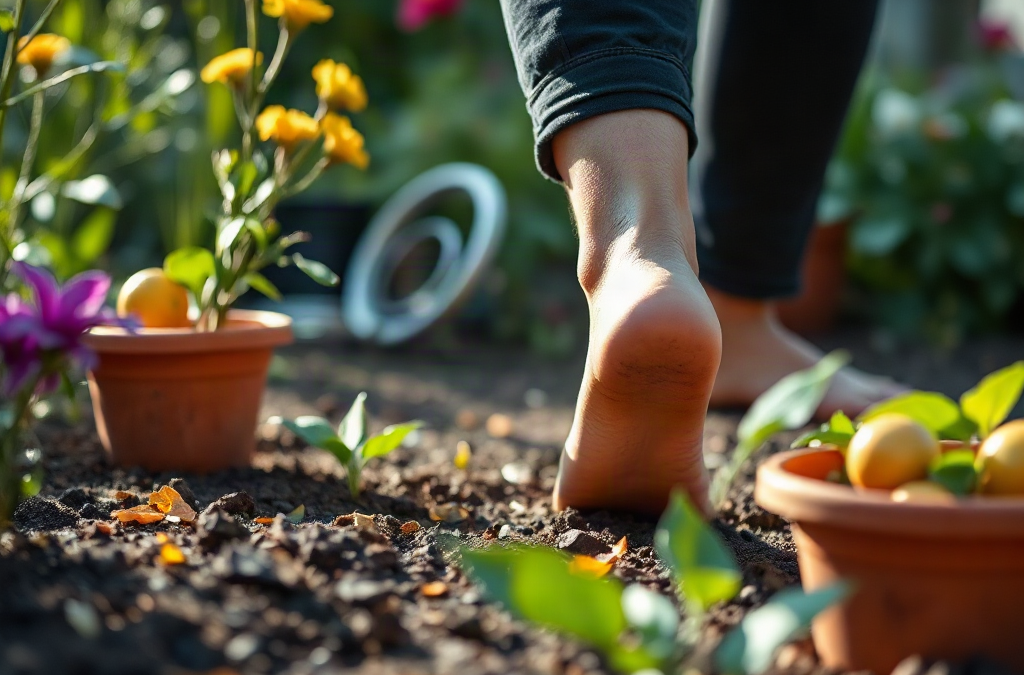
Barefoot gardening exposes feet to soil and surface hazards that can cause punctures, cuts, burns, irritation, and infection, particularly when skin is already cracked or wounded. Hidden glass, thorns, sharp stones, hot paving, animal feces, contaminated soil, and recently applied garden chemicals are the main concerns. Closed-toe shoes with puncture-resistant soles offer the most reliable protection, while gloves cannot protect feet from hazards concealed by mulch or vegetation. Anyone with diabetes, reduced foot sensation, poor circulation, or impaired immunity should be especially cautious and seek prompt medical advice for a deep, contaminated, or worsening wound.
What Can Injure Bare Feet in a Yard?
Garden injuries often begin with objects that are difficult to see from standing height. Mulch can conceal broken glass, landscape staples, wire ends, splintered edging, thorns, sharp gravel, and fragments left from old construction. Dense groundcover presents a similar problem: a foot may land on a hidden object before the gardener has time to shift weight.
Punctures deserve more attention than their small surface opening suggests. A thorn, nail, or stiff plant stem can push dirt and debris beneath the skin, while a shallow cut from metal edging may leave a wider wound that is easier to inspect and wash. Footwear cannot remove every risk, but a closed toe and a firm, puncture-resistant sole create a barrier between body weight and an unseen point. Thin sandals and soft foam clogs leave the toes, heel, or sides exposed and may not stop a rigid object.
Temperature and texture create less obvious surface hazards. Dark pavers, metal edging, composite decking, and dry sand can become uncomfortably hot in direct sun. Damp algae on stepping stones and smooth mud on a slope can be slippery even when they feel cool. Freshly cut stems, stiff stubble, and abrasive concrete can also damage softened skin after watering or rain. The misconception is that a familiar home yard is automatically controlled; weather, maintenance work, animals, and discarded materials can change the walking surface between visits.
A practical inspection should follow the planned work area rather than the whole property. Check the path from the door to the bed, the kneeling area, spaces beside edging, and any location where tools or materials were recently used. Move mulch with a rake instead of testing it with a bare foot. Pick up wire, fasteners, pruning debris, and broken pots before beginning. If visibility is poor, the ground is cluttered, or demolition and repair have occurred nearby, protective shoes are the sensible choice even for a short task.
How Can Soil Exposure Affect Broken Skin?
Intact skin is a useful barrier, but cracks, blisters, punctures, and cuts give soil organisms and contaminants a route into tissue. Ordinary garden soil contains a complex mix of bacteria, fungi, decaying organic matter, and animal material. Contact does not mean an infection will occur, yet deeper wounds, retained debris, delayed cleaning, and impaired healing can increase concern.
Animal feces add a separate sanitation issue. Bare feet may contact droppings deposited by pets or wildlife, especially beneath shrubs, around sand, or in loose beds. Some parasites associated with contaminated soil can enter through skin, although the likelihood varies by organism, climate, sanitation, and location. Wearing shoes, removing feces promptly with suitable protection, and preventing children from entering contaminated areas are more dependable controls than trying to judge whether soil looks clean.
Garden products also require attention. Recently treated turf, spilled fertilizer, lime, concentrated compost liquids, cleaning products, and pesticides may irritate skin or require restricted entry until a label-specified interval has passed. A product marketed as natural should not be assumed harmless to bare skin. The label, not odor or dryness alone, provides the relevant handling and re-entry directions. Shoes used during application should also be kept from carrying residues into living areas.
If skin is punctured or cut, stop work and rinse away visible dirt with clean running water. Gently clean the area, remove only loose material that comes away easily, cover it with a clean dressing, and monitor it. Do not probe deeply embedded debris or close a contaminated puncture with household adhesive. Increasing pain, warmth, swelling, drainage, spreading redness, fever, loss of sensation, or a retained object warrants medical advice. Deep punctures, bites, chemical exposure, and wounds involving rusty or dirty objects may also justify prompt professional assessment, including a review of tetanus vaccination status.
The common failure is returning to the task because the opening looks minor. Depth, contamination, and symptoms matter more than the visible width of the wound. Photographing the injury after cleaning can make changes easier to recognize, but an image is not a substitute for care when warning signs develop.
Who Should Avoid Barefoot Yard Work?
People who may not feel or heal a foot injury normally should treat barefoot yard work as a higher-risk activity. Diabetes, reduced sensation, poor circulation, a history of foot ulcers, impaired immunity, and some medications or medical treatments can make a small wound harder to detect or more consequential. Individual risk differs, so a clinician familiar with the person’s health is the appropriate source for tailored advice.
Reduced sensation changes the usefulness of pain as a warning signal. A hot paver, thorn, or sharp edge may continue damaging tissue when a person cannot feel it clearly. Poor vision and limited balance can compound the problem by making obstacles harder to identify and sudden weight shifts less safe. For these gardeners, footwear should be secure, correctly fitted, and checked inside before use so that a pebble, folded insole, or seam does not create pressure.
Children also need a more controlled setting. They may run through beds, overlook broken materials, or continue playing after a small puncture. Barefoot time on a recently inspected lawn is not equivalent to walking through compost areas, construction debris, thorny borders, or places where animals defecate. Adult supervision should include checking the surface and setting clear boundaries, rather than relying on a general instruction to be careful.
A person with healthy skin and normal sensation still faces avoidable hazards. The decision should reflect the task. Standing briefly on a clean, cool patio while watering containers presents a different exposure from digging, mowing, moving thorny prunings, turning compost, or walking behind a powered tool. Shoes are particularly important around spades, forks, hoes, wheelbarrows, string trimmers, and lawn equipment because soil is not the only source of injury.
Use the more protective option when uncertainty is high. If the surface cannot be inspected, previous materials are buried in the ground, pets use the area, or the work involves forceful tools, closed footwear is a low-effort control. Barefoot comfort does not provide evidence that a site is free of sharp objects, excessive heat, or contamination.
How to Reduce Foot Hazards Before Working
A short pre-work check is more effective than reacting after an object has pierced the skin. Start with the route and work zone, because gardeners are often injured while stepping backward, carrying a load, or moving between a bed and tool storage. Good visibility matters: inspections done at dusk or through thick vegetation can miss hazards that are obvious in daylight.
Use this compact priority check before removing footwear or starting work:
- Scan the surface: look for glass, metal, thorns, cut stems, damaged edging, tools, animal waste, and unstable stones.
- Check recent changes: account for pruning, repairs, deliveries, storms, chemical applications, and animal activity.
- Test conditions safely: assess heat with a hand held near the surface or with footwear on, and check slopes or pavers for slipperiness.
- Match footwear to the task: choose enclosed, supportive shoes for digging, mowing, compost handling, heavy lifting, or cluttered ground.
- Prepare for cleanup: keep clean water, dressings, and a way to remove dirty footwear available.
Footwear selection involves tradeoffs. Waterproof boots keep mud and some liquids away from skin but can trap heat and moisture during long sessions. Breathable work shoes may be more comfortable in dry weather but offer less protection from standing water. Thin garden clogs are convenient for light container care, yet they can slip off and expose the heel. The useful comparison is not shoes versus no shoes in the abstract; it is whether the shoe’s coverage, sole, grip, and fit match the surface and tool being used.
Maintenance determines whether protective footwear remains useful. Remove embedded thorns, check soles for splits, clean mud before it hides damage, and dry shoes thoroughly. Replace footwear when the sole becomes smooth, separates from the upper, or allows sharp pressure points to be felt. Keep a dedicated pair near the usual exit so that convenience does not become the reason for crossing a hazardous area barefoot.
Signs that the approach is working include clear paths, prompt removal of pruning debris, fewer hidden objects under mulch, and footwear consistently used for higher-risk jobs. Repeated near misses, unexplained scratches, tools left on the ground, or animals regularly fouling beds indicate that site controls are failing. In that situation, reorganize storage, add a defined walking path, improve lighting, and make protective shoes the default rather than relying on another quick visual check.
Conclusion
Safe foot protection begins with matching the barrier to the job and the condition of the site. An inspected patio used for light watering is not comparable to a mulched bed containing thorny prunings, a compost area visited by animals, or ground where repairs recently occurred. Clear walking routes, prompt debris removal, product-label compliance, and enclosed footwear address hazards before skin is broken.
Make shoes the default for digging, mowing, moving heavy materials, handling compost, or crossing areas that cannot be fully inspected. After any cut or puncture, clean it promptly and watch for worsening symptoms rather than judging severity by the size of the opening. People with reduced sensation, circulation problems, impaired immunity, or a history of slow-healing foot wounds should obtain individualized medical guidance and avoid relying on pain alone to reveal an injury.
Frequently Asked Questions
Is it safe to walk barefoot in ordinary garden soil?
No soil area is guaranteed hazard-free. Risk is lower on a clean, recently inspected surface, but hidden sharp objects, animal waste, heat, chemicals, and breaks in the skin can make footwear the safer option.
What should I do after stepping on a thorn?
Stop working, wash the area with clean running water, remove only loose debris, and apply a clean dressing. Seek medical advice if the thorn remains embedded or pain, redness, swelling, drainage, or warmth increases.
Can parasites enter through bare feet?
Some parasites associated with fecally contaminated soil can penetrate skin. The likelihood depends on location and conditions, so shoes and prompt removal of animal feces are more reliable than judging soil by appearance.
Are sandals enough protection for yard work?
Sandals may reduce direct contact with hot ground but leave toes and sides exposed and usually provide limited puncture protection. Enclosed shoes with firm soles are preferable for tools, thorns, debris, and uneven surfaces.
When does a garden foot wound need medical attention?
Prompt advice is appropriate for deep or contaminated punctures, retained objects, chemical exposure, worsening symptoms, fever, numbness, or wounds in someone with diabetes, poor circulation, impaired immunity, or delayed healing.


