
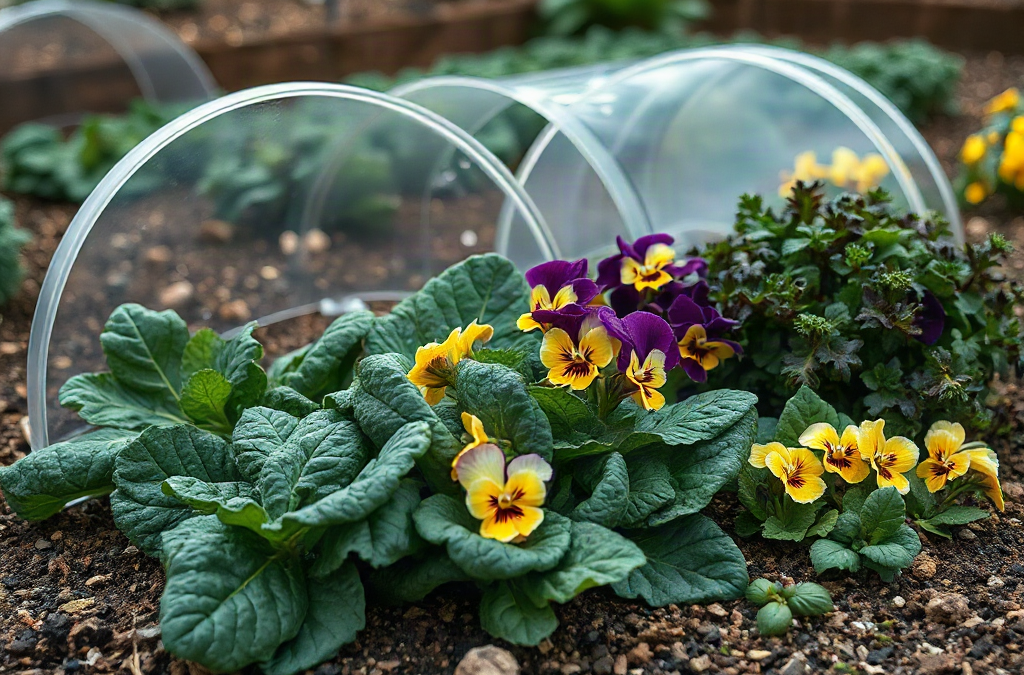
Winter-growing plants for outdoor beds succeed when their cold tolerance matches local frost patterns, soil drainage, and available daylight. Leafy vegetables such as spinach and mâche tolerate colder conditions than fruiting crops, while violas, hellebores, and ornamental kale provide seasonal color where winters permit active growth. Choose plants by USDA hardiness zone and expected minimum temperature, then account for the sharper temperature swings found in raised beds. Sow early enough for roots and leaves to develop before daylight becomes limited.
What you’ll learn
This guide covers the following practical points:
- Matching Plants to Your Winter Climate — Local winter conditions determine whether a plant actively grows, merely survives, or dies.
- Edible Plants for Cold-Season Beds — Leaf and root crops are the most dependable edible choices because they do not need warm weather to flower and set fruit.
- Winter Flowers and Structural Plants — Winter display depends on combining flowers with durable foliage, stems, and seed heads.
- Preparing and Protecting Outdoor Beds — A winter bed performs best when water drains freely while the root zone remains evenly moist before freezes.
Matching Plants to Your Winter Climate
Local winter conditions determine whether a plant actively grows, merely survives, or dies. Minimum temperature matters, but it is not the only limit. Short days slow photosynthesis, frozen ground restricts water uptake, and alternating freezes and thaws can lift shallow roots from the soil. A plant described as cold-hardy may remain alive without producing harvestable leaves or flowers until temperatures rise.
Use the USDA hardiness zone as a starting point for perennial survival, then compare it with your first frost, typical winter lows, and frequency of prolonged freezes. A Zone 7 gardener may harvest spinach through much of winter under a low tunnel, while a Zone 4 gardener is more likely to establish spinach in fall, protect it through dormancy, and harvest new growth in early spring. Coastal climates bring a different concern: persistent rain can rot roots even when temperatures remain moderate.
| Winter Pattern | Suitable Choices | Main Constraint |
|---|---|---|
| Mild, occasional frost | Chard, parsley, calendula, violas | Wet soil and sudden cold snaps |
| Cool with repeated freezes | Spinach, mâche, kale, hellebores | Slow growth during short days |
| Severe or prolonged freezing | Overwintering spinach, garlic, hardy perennials | Dormancy and frozen ground |
Microclimates can shift results within the same yard. A south-facing masonry wall stores daytime warmth, whereas a low pocket collects cold air. Raised beds warm sooner but also lose heat faster than ground-level beds. The common mistake is selecting from a generic list of “winter plants” without distinguishing active winter growth from simple cold survival.
Edible Plants for Cold-Season Beds
Leaf and root crops are the most dependable edible choices because they do not need warm weather to flower and set fruit. Spinach, mâche, claytonia, kale, collards, arugula, parsley, and some lettuces can produce in cool conditions. Carrots, turnips, radishes, leeks, and scallions also suit outdoor beds, although their speed and cold tolerance vary by cultivar.
Spinach and mâche are particularly useful where winters include regular frost. Established plants can tolerate cold better than tender seedlings, and their low rosettes fit beneath simple covers. Kale and collards stand taller and offer repeated leaf harvests, but exposed foliage can become ragged under snow, wind, or ice. Arugula grows quickly in mild weather yet may bolt during an unexpected warm spell.
Timing should be calculated backward from the period when daylight becomes too limited for meaningful growth. Plants need to approach harvestable size before that slowdown. Winter protection preserves existing growth more effectively than it creates rapid new growth. Seed packets often list days to maturity under favorable conditions, so autumn sowings may take substantially longer.
- For repeated leaf harvests: choose spinach, kale, collards, or parsley.
- For compact covered beds: use mâche, claytonia, baby lettuce, or radishes.
- For spring harvest after overwintering: plant garlic, leeks, or hardy spinach at the locally appropriate fall date.
Harvest leaves during a thaw or after frozen tissue has softened naturally. Handling frozen foliage can bruise cells and shorten storage life. Do not fertilize heavily in late autumn in an attempt to force growth; soft, lush tissue is more vulnerable to cold injury, and unused nutrients may move beyond the root zone during wet weather.
Winter Flowers and Structural Plants
Winter display depends on combining flowers with durable foliage, stems, and seed heads. Violas and pansies bloom through cool weather in mild regions and may pause during hard freezes before recovering. Ornamental kale and cabbage contribute colored rosettes rather than true flowers. Calendula can continue flowering where frost is light, while cyclamen species vary widely in hardiness and must be selected carefully.
Hellebores are valuable perennial anchors because established plants flower from winter into early spring in suitable climates. Their leathery foliage works well beside snowdrops, winter aconite, heuchera, sedges, and low evergreen shrubs. In colder regions, the visible winter bed may rely more on evergreen structure and persistent seed heads than continuous bloom. Leaving sound stems from coneflowers, grasses, or sedum adds form, though diseased material should be removed rather than retained.
Site selection affects ornamental performance. Winter sun is lower and may reach beds shaded by deciduous trees during summer, but buildings and evergreen hedges can create deep seasonal shade. Hellebores generally accept partial shade, while violas flower more freely with useful winter light. Good drainage is especially important for crowns that sit near the soil surface.
A frequent purchasing error is assuming every plant sold for winter color is hardy enough to remain outdoors locally. Florist cyclamen and tender decorative plants may be intended for protected displays rather than freezing beds. Check the botanical name, hardiness range, and mature size before planting. Where survival is uncertain, treat the plant as seasonal color or keep it in a movable container.
Preparing and Protecting Outdoor Beds
A winter bed performs best when water drains freely while the root zone remains evenly moist before freezes. Loosen compacted ground and incorporate finished compost before planting, but avoid creating a sharply different pocket of amended soil that holds water around roots. In heavy clay, a slightly raised planting surface can reduce saturation. In sandy ground, organic matter improves moisture retention during dry, windy periods.
Apply mulch after the ground cools rather than piling it on during warm autumn weather. A modest layer of shredded leaves, clean straw, or fine bark buffers temperature changes and reduces soil heaving. Keep mulch away from low plant crowns to limit rot and hiding places for slugs. The goal is temperature moderation, not keeping the soil warm indefinitely.
Frost cloth and low tunnels provide different levels of protection. Breathable frost cloth can rest over hoops and is convenient for short cold events. Clear plastic sheds rain and captures more daytime heat, but it requires ventilation on sunny days and should not touch foliage during freezing weather. Snow can insulate low plants, yet a heavy load may collapse unsupported covers.
- Check the forecast and secure covers before wind and temperature drop.
- Anchor every edge so cold air does not flow underneath.
- Vent enclosed tunnels when sunny conditions raise interior temperatures.
- Inspect soil moisture during thaws and water only when the root zone is dry.
- Remove damaged tissue after the extent of injury becomes clear.
Watch for translucent leaves, blackened growing points, uprooted crowns, standing water, and mold beneath covers. Firm lifted plants back into the soil during a thaw and restore displaced mulch. Condensation and fungal growth indicate that ventilation is inadequate. Protection is working when crowns remain firm, roots stay anchored, and new leaves emerge during mild intervals, even if growth is slow.
Frequently Asked Questions
Which vegetables grow best in outdoor beds during winter?
Spinach, mâche, claytonia, kale, collards, parsley, leeks, and hardy scallions are reliable choices. The best option depends on local minimum temperatures, winter daylight, and whether protection is available.
Can plants grow when the ground is frozen?
Meaningful growth largely stops when the root zone remains frozen because roots cannot take up water normally. Cold-hardy plants may survive dormancy and resume growth during a thaw or in early spring.
When should winter crops be planted?
Plant early enough for crops to become established before short days and persistent cold slow growth. The exact date varies by crop and location, so work backward from local frost patterns rather than relying on one national schedule.
Should outdoor winter beds be watered?
Water during above-freezing weather when soil below the surface is dry. Avoid watering frozen or saturated ground, and reduce irrigation where winter rain or snow already supplies moisture.
Is plastic or frost cloth better for winter protection?
Frost cloth is easier to manage during brief freezes because it breathes. Plastic provides stronger rain and heat control in a supported tunnel, but it needs daytime ventilation and must be kept off foliage.
Conclusion
Build a winter bed around local temperature patterns rather than a universal plant list. Establish cold-tolerant vegetables and ornamentals before growth slows, prioritize drainage, and use mulch or covers to moderate abrupt changes instead of trying to create summer conditions. Start with a small group of dependable plants, record how they respond to freezes and thaws, and adjust sowing dates and protection the following season.


