
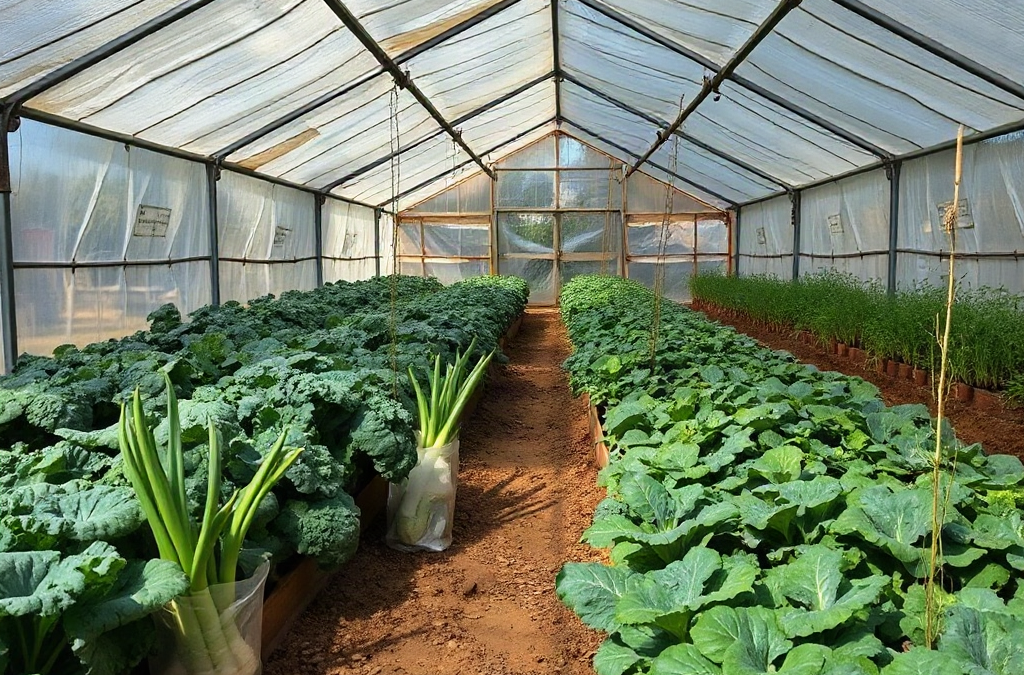
Winter crops for productive cold-season gardens succeed when crop maturity, frost tolerance, and declining daylight are matched to the local sowing window. Kale, spinach, mâche, carrots, leeks, and hardy Asian greens tolerate cold differently, so planting dates should be calculated backward from the period when growth slows sharply. Protection such as row cover or a cold frame reduces wind exposure and moderates temperature swings, but it cannot compensate for seedlings established too late. Prioritize fast leafy crops for autumn harvests, mature hardy vegetables for winter holding, and overwintered crops for the earliest spring picking.
What you’ll learn
This guide covers the following practical points:
- Choose Crops by Their Winter Role — Cold-season vegetables fall into three practical groups: crops harvested before severe weather, mature crops held in place through winter, and plants overwintered for spring production.
- Calculate Cold-Season Sowing Dates — Winter sowing dates should be based on usable daylight and crop maturity rather than the first frost date alone.
- Prepare Beds for Cold, Wet Conditions — Winter beds need drainage and access more than heavy feeding.
- Use Crop Protection Effectively — Low tunnels, floating row cover, cold frames, and unheated greenhouses protect crops mainly by reducing wind and moderating rapid temperature changes.
Choose Crops by Their Winter Role
Cold-season vegetables fall into three practical groups: crops harvested before severe weather, mature crops held in place through winter, and plants overwintered for spring production. Treating every hardy vegetable as an active winter grower leads to disappointing yields. Short days and low soil temperatures can slow growth dramatically even when leaves survive frost.
Fast leafy vegetables are useful for autumn harvests. Spinach, arugula, mustard greens, tatsoi, mizuna, and small lettuces can produce quickly when sown while the soil is still warm. Their tender leaves may need protection during hard freezes, but repeated cuttings are possible before growth stalls. Radishes and baby turnips fill a similar early role where autumn remains long enough for roots to size up.
Kale, leeks, Brussels sprouts, parsnips, carrots, and winter cabbage are better suited to holding in the bed after reaching usable size. Cold weather may improve the flavor of some brassicas and roots, but it does not make undersized plants mature quickly. For winter holding, establish full leaf canopies or nearly finished roots before the darkest part of the year.
Mâche, claytonia, spinach, sprouting broccoli, and selected hardy onions can be overwintered for late-winter or spring harvests. Suitability varies by cultivar and climate. A variety described as frost tolerant may still fail in saturated soil, drying wind, or a sudden freeze after mild weather.
| Winter role | Suitable examples | Main priority |
|---|---|---|
| Autumn production | Arugula, radish, mizuna, baby turnip | Fast maturity before daylight declines |
| Winter holding | Kale, leek, carrot, parsnip, cabbage | Reach harvestable size before growth stalls |
| Overwintering | Spinach, mâche, claytonia, hardy onions | Survive dormancy and resume growth in spring |
Calculate Cold-Season Sowing Dates
Winter sowing dates should be based on usable daylight and crop maturity rather than the first frost date alone. Frost may damage a tender crop overnight, but diminishing light often becomes the earlier limit on meaningful growth. A spinach plant that survives December may add almost no harvestable leaf if it entered winter as a small seedling.
Begin with the seed packet’s days to maturity, then count backward from the point when local growth usually becomes very slow. Add roughly two or more weeks for shortening days, cooler soil, and weather interruptions; slow-maturing crops may require a wider allowance. Local extension planting calendars are more reliable than a national schedule because latitude, elevation, and maritime influence alter the useful growing window.
Succession sowing reduces the risk of choosing one imperfect date. Make two or three modest sowings about one to two weeks apart rather than committing the whole bed at once. The earliest batch may mature before winter, the middle batch may supply protected harvests, and the latest may overwinter for spring. This method is especially effective for spinach, radishes, turnips, and quick Asian greens.
Direct sowing works well while beds remain warm and workable. Once soil cools, germination becomes slower and less even. Transplants can recover time for lettuce, kale, cabbage, and chard, but root disturbance makes them a poor shortcut for carrots and parsnips. A common mistake is transplanting large, crowded seedlings late; stressed roots and limited daylight often prevent recovery.
Prepare Beds for Cold, Wet Conditions
Winter beds need drainage and access more than heavy feeding. Cold roots use water and nutrients slowly, while repeated rain can exclude air from compacted soil. Raised beds or slightly crowned rows are useful in wet climates, whereas level or shallow sunken beds may conserve moisture in dry-winter regions.
Add finished compost before sowing if the soil needs organic matter, but avoid burying large amounts of undecomposed material in the root zone. Excess nitrogen can encourage soft growth that is more vulnerable to cold injury and disease. Established brassicas may need adequate fertility to finish before winter, yet repeated late feeding will not overcome insufficient light.
Choose the sunniest available winter site, preferably away from deep building or evergreen shade. Low areas that collect cold air can freeze sooner than nearby raised ground. Wind exposure also matters: moving air strips heat from covers, dries foliage, and can loosen shallow-rooted plants. A permeable windbreak can improve conditions without creating a stagnant enclosure.
Prepare paths before persistent rain arrives. Boards, stepping stones, or mulched walkways let gardeners harvest without compressing wet beds. Keep mulch modest around small seedlings because thick organic layers can shelter slugs and hold excess moisture against stems. Around mature carrots, parsnips, and leeks, a deeper loose mulch can insulate the soil and make harvesting easier until the ground freezes solid.
Use Crop Protection Effectively
Low tunnels, floating row cover, cold frames, and unheated greenhouses protect crops mainly by reducing wind and moderating rapid temperature changes. They create useful microclimates, but they do not turn midwinter into summer. Crop size at the time protection is installed remains a stronger predictor of harvest volume than the covering itself.
Floating row cover is inexpensive and admits rain, but it should be anchored firmly along every edge. Hoops prevent wet fabric or snow from pressing directly onto leaves. Clear plastic excludes rain and usually traps more daytime heat, yet it requires ventilation on sunny days. A closed cold frame can become surprisingly warm even when outdoor air feels cool, encouraging weak growth or scorching foliage.
Use protection in layers only when conditions warrant it. For example, row cover inside a low plastic tunnel can provide additional buffering during a cold spell. Remove or vent layers when temperatures moderate, especially around leafy crops prone to mildew. Condensation, limp foliage, and persistently wet soil indicate that ventilation or watering practices need adjustment.
Inspect structures after wind, rain, or snow. Sagging covers collect water, broken hoops crush plants, and loose edges release stored warmth. Brush heavy snow from lightweight tunnels before the frame deforms. The weak assumption to avoid is that thicker protection is automatically better; inadequate airflow can damage a crop that would otherwise tolerate the cold.
Manage Harvests and Winter Problems
Winter harvests are most successful during mild, dry parts of the day. Frozen leaves are brittle and can be damaged by handling, so wait until they thaw before cutting. Harvest outer kale, chard, spinach, and Asian-green leaves while leaving the central growing point intact. Take whole heads or roots first when rot, rodents, or an extended freeze threatens storage in the bed.
Water less often than in summer, but do not assume covered soil stays moist. Tunnels can exclude rainfall for weeks. Check moisture below the surface and water on a relatively mild morning so foliage and bed surfaces can dry before night. Yellowing, stalled plants may reflect saturated roots rather than hunger; adding fertilizer to waterlogged soil usually compounds the problem.
Slugs, rodents, aphids, and fungal diseases can remain active under protection. Check leaf undersides, crowns, and tunnel edges during every harvest. Remove decaying leaves promptly, thin crowded plants where airflow is poor, and use physical rodent barriers when roots show chewing. Repeated losses in the same bed call for crop rotation and sanitation rather than another layer of cover.
Use a short weekly check to keep small problems from becoming crop failures:
- Feel the soil beneath covers before watering.
- Vent enclosed structures during mild, sunny weather.
- Look for chewed roots, slime trails, dead leaves, and mold.
- Secure fabric, plastic, hoops, and anchors before storms.
- Harvest mature produce before a severe freeze or prolonged wet period.
Signs of a functioning winter system include firm crowns, healthy new leaves during mild spells, usable roots, and soil that is moist without remaining saturated. Collapsed crowns, sour-smelling soil, extensive leaf spotting, or repeated freeze-thaw damage signal that drainage, ventilation, crop choice, or planting time needs correction.
Frequently Asked Questions
Which vegetables are easiest to grow through winter?
Spinach, kale, mâche, claytonia, leeks, carrots, and hardy Asian greens are dependable choices when matched to local temperatures and planted early enough to establish before short days slow growth.
When should winter vegetables be planted?
Count backward from the local period of sharply reduced growth using the crop's maturity time, then add at least two weeks for cooler conditions. Regional extension calendars can refine that starting point.
Do winter crops need a greenhouse?
No. Many hardy vegetables can grow or remain harvestable outdoors. Row cover, low tunnels, mulch, or cold frames extend the season, while an unheated greenhouse offers added shelter from wind and rain.
Should cold-season beds be watered?
Yes, but less frequently than summer beds. Check below the surface and water during a mild morning only when the root zone is becoming dry, especially beneath rain-shedding plastic or glass.
Why are hardy vegetables surviving but not growing?
Low light and cold soil can pause growth even when foliage survives frost. The crop may have been planted too late, so keep it healthy for spring or harvest what is usable rather than forcing growth with fertilizer.
Conclusion
A reliable cold-season bed is built around timing rather than frost tolerance alone. Assign each crop to an autumn, winter-holding, or overwintering role; sow while enough warmth and daylight remain; and protect established plants without sacrificing ventilation. Check drainage, moisture, pests, and cover security throughout the season. If crops repeatedly enter winter undersized, move the next sowing earlier before investing in more elaborate structures.


